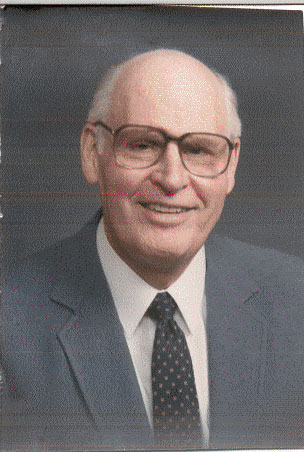
Pastor Harold Brokke and his wife Cathy Brokke have served the Lord Jesus as counselors to countless missionaries all over the world. Harold is a former President of Bethany Fellowship International, the community that established and runs the renowned Bethany House Publishers. Presently Pastor Brokke serves the Bethany Missionary Church as Senior Pastor Emeritus. Cathy was the Director of Bethany Fellowship Missions for many years. Both live in Minneapolis. God has called Harold to minister to people and communities around the world on Bible Prophecy and sanctification through the Message of the Cross. This article is presented to us by Bev Cooley, bev.cooley@bethfel.org.
We invite you to support this ministry. Contributions in support of this Ministry are tax-deductible. Kindly send your support to
Bethany Fellowship International
6820 Auto Club Road, Suite A
Bloomington, MN 55438.
Please write Thirumalai's Ministry in the memo column.
BOOKS FOR YOU TO READ
AND DOWNLOAD
- THE LAW IS HOLY by Pastor Harold Brokke
- WORLD MISSIONS - A HISTORICAL PERSPECTIVE
by Tom Shetler - LIVE A VICTORIOUS LIFE IN THE SHADOW OF THE CROSS! : INTERCESSION, WARFARE, AND DELIVERANCE
by Pastor Ted Hegre. - MISSING PIECES: THE INCOMPLETE GOSPEL by LeRoy Dugan
- LUTHER'S PROTEST by M. S. Thirumalai
- TELL ME IT'S TRUE ...
A Book Of Poems by Stan Schmidt - SOMETHING IS GREATER THAN WONDERS...
A Book Of Poems & Free Verses by Pastor Harold Brokke - GEMS OF TRUTH by Stan Schmidt
- WHERE IN THE WORLD IS GOD? by Alec Brooks
- LIGHT OF THE WORLD, an Original Screenplay by W. G. Orr
BACK ISSUES
- NOVEMBER 2001
- DECEMBER 2001
- JANUARY 2002
- FEBRUARY 2002
- MARCH 2002
- APRIL 2002
- MAY 2002
- DECEMBER 2002
- JANUARY 2003
- FEBRUARY 2003
- MARCH 2003
- APRIL 2003
SEND YOUR ARTICLES FOR PUBLICATION IN Christian Literature Today.
- E-mail your articles and book-length reports to thirumalai@bethfel.org or send it by regular mail to:
M. S. Thirumalai, Ph.D.
6820 Auto Club Road #320
Bloomington, MN 55438 USA - Your articles and booklength reports should be written, preferably, following the MLA Stylesheet.
- The Editorial Board has the right to accept, reject, or suggest modifications to the articles submitted for publication, and to make suitable stylistic adjustments. High quality, academic integrity, ethics, and morals are expected from the authors and discussants.
Copyright © 2001
M. S. Thirumalai
THE LAW IS HOLY
Pastor Harold Brokke
PREFACE
Many of us have sung the words and experienced the truth Christians often sing:
"Free from the law, O happy condition."This is a good song to sing and a necessary experience. A misconception, however, has crept into our attitude toward the law. The law is treated as a rather delinquent member of the family of God's revelation. We should not treat the law with contempt any more than we treat the police department with contempt. All of us are happy that we are free from the condemnation of the police, but we are also happy that a police department is o n duty day and night. So it is with the law. Although the Christian is not under the law, he should be happy that the law remains and through grace he can live in harmony with the law.
Most professing Christians cannot say the Ten Commandments by memory, nor do they refer to them very often. The prophets and the apostles were not forgetful or careless about the law. In fact, Isaiah declares that the advent of Christ would "magnify the law, and make it honorable" (Isa. 42:21). Paul said that by faith we "establish the law" (Rom. 3:31) and also that the "law is holy" (Rom. 7:12).
Many of these chapters were first published as a series in the Message of the Cross, and written to show that the law is a vital part of God's government of the world in our present day, and that God's holy law is a divine prerequisite to the deepest experience of grace.
The Catholics, Lutherans, and a few other groups generally consider the commandment "Thou shalt not make unto thee any graven image . . ." as a part of the first commandment. I have used it as the second commandment. This explains why the numbering of the commandments will seem different to some who read this book. The only purpose is to give the fullest statement of the Ten Commandments.
Harold J. Brokke
TABLE OF CONTENTS
All Scripture quotations unless otherwise designated are from the American Standard Version, except the commandments, which are from the King James Version.
The Ten Commandments as given in Exodus
- Thou shalt have no other gods before me.
- Thou shalt not make unto thee any graven image, or any likeness of any thing that is in heaven above, or that is in the earth beneath, or that is in the water under the earth: thou shalt not bow down thyself to them, nor serve them: for I the Lord thy God am a jealous God, visiting the iniquity of the fathers upon the children unto the third and fourth generation of them that hate me; and shewing mercy unto thousands of them that love me, and keep my commandments.
- Thou shalt not take the name of the Lord thy God in vain; for the Lord will not hold him guiltless that taketh his name in vain.
- Remember the Sabbath day, to keep it holy. Six days shalt thou labour, and do all thy work: but the seventh day is the Sabbath of the Lord thy God: in it thou shalt not do any work, thou, nor thy son, nor thy daughter, thy manservant, nor thy maidservant, nor thy cattle, nor thy stranger that is within thy gates: for in six days the Lord made heaven and earth, the sea, and all that in them is, and rested the seventh day: wherefore the Lord blessed the Sabbath day, and hallowed it.
- Honor thy father and thy mother: that thy days may be long upon the land which the Lord thy God giveth thee.
- Thou shalt not kill.
- Thou shalt not commit adultery.
- Thou shalt not steal.
- Thou shalt not bear false witness against thy neighbour.
- Thou shalt not covet thy neighbour's house, thou shalt not covet thy neighbour's wife, nor his manservant, nor his maidservant, nor his ox, nor his ass, nor any thing that is thy neighbour's. Exodus 20:3-17
CHAPTER ONE
THE FOUNDATIONS OF RIGHTEOUSNESS"If the foundations be destroyed, What can the righteous do?" (Ps. 11:3).SPIRIT OF INQUIRY AND PRAYER PRECEDES A MOVING OF GOD
We are beginning to see and feel a stirring among Christians today, a desire to know the possibilities of the Christian life and the true nature of the church of Christ. This spirit of inquiry and prayer always precedes a moving of God. It is wholesome to ask questions if we are willing to accept the answers God gives to us.
One reason that God could use Gideon, the judge of Israel, was for this very thing. When God appeared to Gideon (Judges 6, K.J.V.), He said to him, "The Lord is with thee, thou mighty man of valour." Gideon's answer to the Lord was, "O my Lord, if the Lord be with us, why then is all this befallen us? And where be all his miracles which our fathers told us of, saying, did not the Lord bring us up from Egypt? but now the Lord hath forsaken us, and delivered us into the hands of the Midianites." Following this, Gideon was commissioned. Gideon had an inquiring heart: he wanted to know why things weren't happening in his day as they had happened in the past.
This question should be our question also. It is wholesome and it is right that we inquire. The only place where questions are not asked and inquiry is not made is in a graveyard. When men and women ask no questions, spiritual death has set in. On the other hand, questions must stem from faith, not from contention or unbelief.. We must be ready to accept the revelation God gives us.
WHY IS THERE NOT THE SAME GREAT MOVING OF GOD NOW?
Many of us have been asking the same questions that Gideon asked: "Why is there not the same great moving of God that there was in other generations? Why do we not have the same conviction of sin, the same grand movings of the Holy Spirit, the same apprehension of the holiness of God, the same carefulness in our daily walk? Where are the signs that should follow those who believe?"
FOUNDATIONAL TRUTHS
God alone knows the full answer to these questions. However, there are some foundational truths that are clearly revealed in the Scriptures.
We read in one of the Psalms, "If the foundations be destroyed, What can the righteous do?" We believe that one of the foundations is related to the term we find in the New Testament, the kingdom of God, or in more contemporary terms, the rule of God, the government of God. The government of God is a kingdom, the rule of a king over men. Where there is government, there is law. God reveals His will as to man's conduct by giving him commands. Before Adam and Eve fell, He gave a command: "Of every tree of the garden thou mayest freely eat: but of the tree of the knowledge of good and evil, thou shalt not eat of it." If they disobeyed, they would "surely die." After the flood, with the advent of Israel when man again disobeyed, God gave the law through Moses-ten rules for the conduct of His people. These laws were not only for His people but for all mankind, again stating as He had to Adam that if they were not followed, death would be the penalty.
We cannot understand salvation without understanding the law of God. If we cease to present the law as the divine requirement for human conduct and life, we cease to present the message of salvation through Jesus Christ as it should be presented. The law today has been made void by this statement to men: No one can keep the law, and no one ever will. Though this is true from the human side, it limits God's divine provision in Christ. It releases men from clear moral obligation, and it also nullifies conviction of sin. Men blame their failure on moral helplessness and therefore are justified in their own eyes. They do not enjoy the blessings of God's salvation and deliverance. One thing is very clear in the Bible: God never releases man from the obligations of being righteous. God expects holiness. God expects the practice of righteousness.
Gideon is an example of the manner in which God insists on obedience. After he had his encounter with God, the sincerity of Gideon's seeking attitude was tested by practical instructions from God concerning his relationship to the problems of his day. First was this: he showed his sincerity by his attitude of worship and reverence toward God. Secondly, he was instructed to destroy the altar of Baal, the main infraction of the law of God in his day. Everywhere in Israel the commandment "Thou shalt have no other gods before me. Thou shalt not make unto thee any graven image" was being disobeyed. Gideon revived the meaning of this law by faith and personal obedience. The law was a foundation for Israel's deliverance from Midian. Through Gideon, the law had been enforced, and it set in motion the process of deliverance.
NATURE OF LAW
Law, in order to be law, must be enforced. If it is treated as advice rather than as a command, the law becomes useless. If, for instance, all society considered stopping at a red stop light only good advice, how long would society maintain order and safety? If enforcement and penalty are taken away from law, there is no more law. The laws of God are similar to the laws of man in their purpose. They could even be compared to the rules of some sports event. Those who are in the sport realize that penalty is necessary to keep the game orderly and fair. Rules and laws were made to make society orderly and the best for all involved. If the rule is violated, a citizen or a sportsman must be penalized. Penalty in a game is rather insignificant, but the penalty for the broken law is exceedingly serious. To break the law, that is, the rules, is called sin in the Bible. I John 3:4 (K.J.V.) says, "Sin is the transgression of the law."
This is a foundation; and if it is not laid in our preaching and teaching, the very meaning of redemption is lost. By the law is the knowledge of sin. Men must come to God as sinners, that is, men who know that they have violated the law and the government of God, and that they are the very enemies of God himself because they have broken His laws. Without this realization, salvation cannot be understood, and the revelation of the shed blood of Jesus cannot be appreciated.
PRECIOUS WORDS OF REDEEMING GRACE AND THE STERNEST WORDS OF LAW
Have you ever noticed how the most precious words of redeeming grace are the sternest words of law and justice? For instance, "death," "shed blood," "crucifixion," "hangeth on a tree"-these words which we now connect with mercy, forgiveness, salvation, and eternal life-are the very words which legally speak of penalty, judgment, and condemnation. The law itself, when it is understood, is an expression of God's divine government, which is the very basis of the understanding of the death that Jesus died for our salvation.
Law is understood by all mankind. No one needs to have a special education or "a great light" to know what "Thou shalt not steal" or "Thou shalt not commit adultery" means. The gospel, on the other hand, is not naturally understood by people unless they need the gospel. The medicine of the doctor, for example, is not important to a person until he is sick. This is what Jesus himself said: "They that are whole have no need of a physician; but they that are sick." The gospel is a remedy that men must have when they begin to sense their desperate need. The purpose of the law is to make men feel their need of Jesus Christ and His gospel of forgiveness. The law condemns sins, but it cannot forgive them. The law requires freedom, but it cannot grant freedom. The law demands spirituality, but it cannot give men spirituality. The fact that Jesus can give these things to men who feel their need indicates the great importance of presenting the law of god in its full force. It is to make men know that condemnation awaits them, sinful bondages bind them, and they have no spiritual life unless they find Jesus Christ as Saviour and Lord.
LAW HAS NO GRACE NOR FORGIVENESS TO OFFER
The law has no grace nor forgiveness to offer. It is "the ministration of death" to man who has broken the law. The more man faces the law as a transgressor, the more it necessitates someone or some power outside of the law, or apart from the law, to bring that deliverance for which the heart cries. John the Apostle heralds out the message, "The law was given through Moses; grace and truth came through Jesus Christ." He is that Someone! What the law could not do, Jesus Christ, the victorious Son of God, can do. For those who will turn from all sin with their hearts and wills, Jesus Christ can bring a full release from condemnation, forgive every sin, release from every sinful bondage, and impart the Holy Ghost to make a man spiritual so that the "ordinance of the law might be fulfilled in us, who walk not after the flesh, but after the Spirit."
CHAPTER TWO
TRUE BELIEVING"For if ye believed Moses, ye would believe me; for he wrote of me. But if ye believe not his writings, how shall ye believe my words?" (John 5:46, 47).UNDERSTANDING WHAT SIN IS
The lack of understanding of the law is realized by the attitude the average man has toward this terrible thing called sin. If you were to ask the "man on the street" the question "What is sin?" you would be surprised at the hazy and sometimes unreasonable answers that would be given. Only a few people would answer right. In our generation the meaning of sin is little known. The reason for this is that the Ten Commandments have not been acknowledged as they should. We have lost the meaning of some fundamental truths which must again be accepted if we are to revive the seriousness of personal sin in the church and in the world.
The following are three verses (K.J.V.) that contain the key to this revival of true conviction of sin: "By the law is the knowledge of sin" (Rom. 3:20); "Sin is the transgression of the law" (I John 3:4); "The wages of sin is death" (Rom. 6:23).
When a man faces these dynamic issues, he begins to know and feel the need of repentance. The repentant heart is the soil in which true believing grows. True believing cannot be produced where the heart is unbroken and hardened by sin. The Pharisees could not believe in John's ministry because of the unrepentant and condition of their hearts. Jesus said to them, "John came unto you in the way of righteousness, and ye believed him not; but the publicans and the harlots believed him: and ye, when ye saw it, did not even repent yourselves afterward, that ye might believe him" (Matt. 21:32).
The Gospel of John was written with the aim of producing faith. This is expressed in these words: "that ye may believe that Jesus is the Christ, the Son of God; and that believing ye may have life in his name" (John 20:31). In order to bring about that "true believing," the Holy Spirit led the Apostle to select different works and words in the life of Christ to reveal the hindrances and helps to faith. In John 5, following the healing of the man at the pool of Bethesda, Jesus had a verbal battle with the Jews; and in that conflict Jesus analyzed their resistance to His ministry in these words: "Had ye believed Moses, ye would have believed me: for he wrote of me. But if ye believe not his writings, how shall ye believe my words?" (John 5:46, 47, K.J.V.).
HAD YOU BELIEVED MOSES . . .
At first this may seem to carry little significance for us, but remember these words were spoken to the orthodox, fundamental, Scripture-believing, Moses-revering Jews. Yet Jesus dared say to them, "Had ye believed Moses, ye would have believed me."
If there was any form of idolatry left among the Jews, it was their adoration of Moses and his writings. The Pharisees said they did believe Moses, but Jesus dared to say they didn't believe Moses.
This was a doctrinal, two-edged sword wielded by the Lord to cut the Pharisees loose from their lip-profession to a radical life-possession of faith in the person and words of Jesus. But they dodged it and remained bound and blind. This word was spoken not only to the fundamental Jews of His day but also to the fundamental Christians of our day. We assert that we believe Jesus, but do we believe Moses even in our day? The question needs answering! We are in the precarious position of having both the words of Moses and of Christ, and while we assert our faith in the whole Bible, it is possible that we are deceived.
Let us start with Moses. What does it mean to believe Moses? Essentially it means to believe what Moses presented to Israel and to the world. In John it says, "The law was given by Moses." In other words, we must believe in the divine authority of the Ten Commandments and that Moses had divine credentials to present the Law to the human race as the minimum requirements of righteousness.
To believe in Moses is to believe in the necessity of holiness of life. Moses said on God's behalf, "I am Jehovah … your God…ye shall therefore be holy, for I am holy" (Lev. 11:45). With this command to be holy came also the promise that "the Lord thy God will circumcise thy heart, and the heart of thy seed, to love the Lord thy God with all thine heart, and with all thy should, that thou mayest live" (Deut. 30:6, K.J.V.). It is this love that is the fulfillment of the law.
To believe Moses is to believe in the necessity of redemption by blood and the demand for an unfailing mediator between man and a holy God. Moses' whole life and ministry spoke of this. The Passover, the making of the tabernacle, the law of sacrifice, the office of the priest, the brazen serpent, and Moses' intercessory prayers for the sinning nation all were included in this teaching of redemption.
To believe in Moses is to believe in his prophetic message from God such as, "I will raise them up a Prophet … and will put my words in his mouth; and he shall speaks unto them all that I shall command him. And it shall come to pass, that whosoever will not hearken unto my words which he shall speak in my name, I will require it of him" (Deut. 18:18, K.J.V.). This word alone should have made the Pharisees shudder and repent when they saw the works and heard the words of Jesus Christ. But they didn't because their faith in Moses was formal and dead and cold. It had form but no fire.
These things are the main characteristics in Moses and his writings. To believe on Moses is to believe in these things. Again we remind ourselves that Jesus said, "Had ye believed Moses, ye would have believed me." Jesus was reasoning with them and He is reasoning with us. Do we believe Moses, or have we annulled the law by omitting or toning down the message of repentance? Are we annulling the call to holiness by teaching Christians that sin must be present and active in our hearts and lives until physical death? Do we make death the means of deliverance rather than the Cross and Spirit of Christ? Have we annulled the meaning of redemption by saying that it teaches only forgiveness and assurance rather than God's total, unconditional ownership of every redeemed person? The modern convert sees the Saviourhood of Jesus but fails to see His Lordship and His right to rule the heart, mind, body, time, possessions, and all that he is. To be redeemed means to pursue no activity on earth without God's direction and pleasure. God calls anyone saved by blood "Mine."
To believe in Moses means to believe in these basic things. If we do not believe these things, Jesus asserts that we are not able to believe in Him and His words.
THE FIRST QUESTION: DO I TRULY BELIEVE IN MOSES AND HIS WRITINGS?
The question we must ask first of all is not, "Do I believe in the words of Christ, the wonderful Son of God?" but "Do I now truly believe Moses and His writings?" Moses was a simple servant of God to tutor men and prepare them for the Son of God, Jesus Christ. If we in any measure reject the servant, we in the same measure reject the son. (See Galatians 3:2, 4-7 and Hebrews 3:1-6.)
Having decided that Moses' teachings concerning spiritual truth are to be believed with an obedient faith, we may now ask ourselves whether we believe Christ and His words. What is it to believe in Christ? It is to believe that He is God's final word to man. It is to believe He is the light, life, wisdom, power, and the truth of God incarnate; that He is the bodily home of the fullness of deity, the one way in which we can come to the Father and know the Fathers; that He is the one mediator of heaven and earth. To believe in Christ means to believe that whatever Moses demands, Jesus fulfills; that when Jesus ministered on the earth, He was the example that we should follow in His steps and do the works He did and even greater. It is to believe that when Jesus died, sin's power was broken; when He arose, death's dominion was annulled; when He ascended as the Son of man, the dominion over Satan was given over to men who believe in Him; when Jesus comes again, the world will be judged, and a new kingdom will come to earth inherited and ruled by the pure and meek resurrected believers!
THE HOLY SPIRIT AS THE UNSEEN PERSON TO COME UPON, FILL, EMPOWER, . . .
One more thing that must be believed is the promise of the Holy Spirit as the unseen Person to come upon, fill, empower, teach, and direct the church in its witness for Christ unto the ends of the earth. The most evident sign that we may not be believing Moses or Jesus is that the wonderful possibilities of the promise of the Holy Spirit are strangely lacking in the church. When the promises are the true possession of the church, the world is convicted and the church increasing expresses the practical righteousness of Christ. Satan's work begins to be judged and destroyed. The sign of the Spirit's presence in the believer and in the church is the grace of the Spirit which reveal the love of Christ and the gifts of the Spirit which reveal the power of Christ and the gifts of the Spirit which reveal the power of Christ. (See Galatians 5:22, 23 and I Corinthians 12:8-10.)
A very simple explanation of the power of the apostolic church is this: Those who believed Moses received Christ, and those who believed Christ received the Holy Spirit. What power this church manifested! What love! What reality! What abundance of fruit was produced!
It is the responsibility as well as the privilege of every man to submit to God's will, as His will is made plain. We must walk in the light that we receive.
A child was told by his father to take a parcel to a town a few miles away. The child had never gone along this way before, but the father pointed out the trail over which the lad should go. The boy said, "I'm ready to go, Father, but I don't see how that path will ever reach the town."
"Do you see the trail as far as to the big tree down there?" asked the father.
"Oh yes, I see that far."
"Well, when you get there by the tree, you will see more of the trail, and so on until the town breaks into view."With this simple illustration we can more fully understand what Jesus meant when He said, "Had ye believed Moses, ye would have believed me, for he wrote of me" (John 5:46). The Pharisees had not obeyed nor followed the instructions of Moses, so how could they understand the revelation given through Christ? If, like the little lad, they had obeyed the instructions given them, they would have been prepared for the ministry of Jesus Christ and also of the Holy Spirit. The Jews through pride and rebellion had not done what Moses said. They loved their traditions and had not proceeded on the path of obedience. As long as they refused to admit their guilt, they were not ready for Christ. John the Baptist tried to show them their condition, but they refused his reproof.
MAN HAS NOT CHANGED
Man has not changed. If the Jews could make this mistake, so can we. We can call Jesus our Saviour and Lord and yet not do what He says. So many today lack the sense of moral obligation.
Even though we have not given voice to our rebellion and indifference in so many words, we may by our attitude leave God out of our daily lives. We have not been passionate advocates of His honor and His glory. We have not wanted His moral law or His government to annoy us or to cause us any inconvenience. If we will judge ourselves, we will not be judged later on. This kind of self-judgment must begin in the church before it affects the world.
During the revivals of Jonathan Goforth after the Boxer rebellion in China, revival spread through the churches, and men found cleansing in the precious blood. Sins of years' standing were washed away in the power of Christ's redemption, and the Holy Sprit filled believers' lives. These revivals started with a strong sense of conviction of sin and with a sense of God's judgment of sin. The Chinese called this time of conviction "hsiao shen pan" (small judgment). This was a judging work of the Holy Spirit while the way was still open to avail oneself of the cleansing power of the blood of Jesus.
Thus we are confronted with two certainties - the one sobering and the other very glorious. The sobering certainty is this: judgment is coming for all men before God's great judgment seat. The glorious certainty is this: Jesus has shed His blood to wash away ever sin and disobedience that might condemn us on the judgment day.
FIRST COMMANDMENT
And he said unto him, Thou shalt love the Lord thy God with all thy heart, and with all they soul, and with all thy mind. This is the great and first commandment. And a second like unto it is this, Thou shalt love thy neighbor as thyself. On these two commandments the whole law hangeth, and the prophets. - Matthew 22:37-40My goal is God himself; not joy, nor peace,
Nor even blessing, but himself, my God:
'Tis His to lead me there, not mine, but His-
At any coast, dear Lord, by any road! - F. BrookWe should fear and love and trust in God above all things. - Martin LutherHearken unto me, O Jacob, and Israel my called: I am he; I am the first, I also am the last. Yea, my hand hath laid the foundations of the earth, and my right hand hath spread out the heavens: when I call unto them, thy stand up together. -- Isaiah 48:12, 13Jesus, our only joy be Thou,
As Thou our prize wilt be;
Jesus, be Thou our glory now,
And through eternity. - Bernard of Clairvaux
CHAPTER THREE
OUR GOD, ONLY AND ALWAYS
"Thou shalt have no other gods before me" (Ex. 20:3).WHAT DOES FIRST COMMANDMENT MEAN TO YOU?
What does this first commandment mean to you? To the materialistic or the nominal churchgoer, it may be just so much poetry. If, however, we once began to realize God's holy jealousy and holy hatred for sin (whether it be hidden or apparent), we would literally tremble.
When God says that he is a jealous God, He is not playing with words. Goforth testifies that as he ministered in a province of China, the Spirit of burning was much in evidence. Into one of the meetings came a backslidden pastor, who had despised the admonitions of godly men and refused to turn from his bad influence on other members of the church. The meeting was filled with the holy presence of God, but as soon as this ungodly man came in, God withdrew His manifest presence. For almost a full half-hour this man sat in the service. Most of the people knew he was there, and perhaps some knew that he was the influence that put a deadness into the service. Finally the man left, and again God's merciful presence returned and melted the hearts of the people. God is a jealous God.
The very inception of the Ten Commandments originated in God's holy jealousy. God wrote with His own finger these commandments, the first of which is "Thou shalt have no other gods before me." Perhaps some superficial intellect will think that God should not be jealous. Well, He is-intensely so-and it is good for us that He is. It is that passionate jealousy of God that makes Him pursue fallen man and plead with him, in order to turn him from his hell-bent madness.
This first commandment is not only a law of God's nature, but it is also a law of man's own moral makeup, for man cannot give equal preference to two masters. Since such an attempt is a violation of God's rule, it is a sin. It excludes God from the life of man.
NO OTHER GODS!
"No other gods!" The word god means anyone or any pursuit that demands and receives the loyalty and preference of the creature. While attending an art school in Minneapolis some years ago, I had a discussion with my art instructor about religious matters, and witnessed to him concerning Christ. He had only a passing interest and summed up his religion with this short and nonchalant reply: "Art is my god." He had given his supreme preference to his skill in making portraits and pictures in charcoal and paint. He worshipped the god of his own making.
Paul's description of some opponents of the Cross in his day who broke this first commandment is his: "Whose god is their belly." In other words, men had seen to it that their religion assured them of social security and a full stomach. This was their highest motive for living. How closely this description applies to the pleasure- and security-seekers of our own day!
Rightly or wrongly, whoever and whatever receives our supreme preference and obedience is god to us. This first commandment indicates that if we so choose, we can give this preference to something besides God himself.
ETERNAL AUTHORITY OF GOD
This commandment also teaches the eternal authority of the one uncreated person. His is the glory, the worship, and the power. He is exalted over all. "For of him, and through him, and unto him, are all things." But even if this is true, God does not force man to this loyalty to himself. He makes it plain to man that no one can be before Him, but man still has a choice to make concerning this issue. He can obey or disobey the command. God has revealed His will; man must decide who shalt be God. No dispensation or doctrine can erase or cancel the meaning of this commandment. God, revealed in Jesus Christ, ever and only has the right to be God in man's heart and life.
The greatest exposure of man's violation of the command "Thou shalt have no other gods before" was the crucifixion of Jesus. The generation that could see and even handle Jesus not only failed to believe and worship Him, but also planned and permitted His death on a criminal's cross. Did these men crucify Him in ignorance? Yes, in willful ignorance. Jesus recognized this when He cried from the cross, "Father, forgive them; for they know not what they do."
AT WAR WITH GOD
This is exactly the issue. Mankind was at war with God revealed in Jesus Christ, not theologically but dispositionally - that is, their hearts and minds were carnal and antagonistic to the heart and mind that was in Christ. At the time of the incarnation a few Israelites who were repentant, contrite, and led by the Spirit knew Him even though He was in the form of a baby. Such was the experience of the Judean shepherds and of the elderly Simeon and Anna.
The wise, astute, austere, theologically proper Pharisees and scribes did not know God. They could not discern God in Jesus. They did not know Him in the Spirit; therefore they could not know Him in the flesh. They had other gods before Him. Not only in an external way but also in their disposition they did not know; moreover, they did not want God as revealed in Christ. Hence, these men were the crucifiers of Jesus himself, who is the revelation of God.
Christ's enemies desired His death, but did His followers? In that awful hour even the disciples were passive. They were self-saving and self-protecting. They depended on themselves rather than on Christ. Very few that day who knew the facts concerning Jesus could confess that they had no other gods besides the God, Jesus Christ.
Viewing Calvary's passion and the awful crime and cowardice of sinners, every believer must cry "Hallelujah, what a Saviour," for Jesus cried out from the cross, "Father, forgive them!" For their transgressions of this first commandment, as well as of the others, he forgave them. Thereafter, those who believed in Him could receive remission of their sins. There is forgiveness in Him for those who come repenting of their sins.
REPENT!
Today if God in Christ has not been first in our lives, we must repent. We must turn from our sins. We must surrender our own preferences and affections to the Cross, for "they that are of Christ Jesus have crucified the flesh with the passions and the lusts thereof" (Gal. 5:24). We must by a complete surrender to God put away forever the old manner of life and all that pertains to it, all that has betrayed Christ and crowded Him out as Lord in our lives.
Think of Peter. He betrayed the Lord even when a frail maiden asked him if he were a follower of Jesus Christ. Peter lied. Peter was a coward. Peter cursed. Most certainly he transgressed the first commandment: "Thou shalt have no other gods before me." But in the book of Acts what a different Peter we see-Peter cleansed from his sins and baptized with the Holy Spirit. Later on he is the one that recorded in his epistle, "Sanctify in your hearts Christ as Lord: being ready always to give answer to every man that asketh you a reason concerning the hope that is in you, ye with meekness and fear."
The same Lord who commanded, "Let there be light, and there was light," is the One who commands, "Thou shalt have no other gods before me." All His words and commands are effective. Through the gospel of Christ, men and women have been regenerated and transformed into true worshippers of God and are able to sing from their hearts:
Jesus, priceless treasure, Source of purest pleasure, Truest friend to me: Ah, how long I've panted And my heart hath fainted, Thirsting, Lord, for Thee. Thine I am, O spotless Lamb! I will suffer naught to hide Thee. Naught I ask beside Thee.SECOND COMMANDMENT
Forasmuch then as we are the offspring of God, we ought not to think that the Godhead is like unto gold, or silver, or stone, graven by art and man's device. -Apostle Paul (Acts 17:29)"Jealousy is cruel as the grave." As the grave devours men's bodies, so God will devour images worshippers. -- Thomas WatsonFor rebellion is as the sin of witchcraft, and stubbornness is as iniquity and idolatry. - Samuel the Prophet (I Sam. 15:23)The dearest idol, I have known, What'er that idol be, Help me to tear it from Thy throne, And worship only Thee. - - W. CowperIf the father be a traitor to his prince, no wonder if all his children suffer. God may visit the iniquity of the fathers upon the children. - - Thomas Watson
CHAPTER FOUR
THE EXCLUSIVE IMAGE OF GOD
"Thou shalt not make unto thee any graven image, or any likeness of any thing that is in heaven above, or that is in the earth beneath, or that is in the water under the earth. Thou shalt not bow down thyself to them, nor serve them: for I the Lord thy God am a jealous God, visiting the iniquity of the fathers upon the children unto the third and fourth generation of them that hate me; and showing mercy unto thousands of them that love me, and keep my commandments" (Ex. 20:4-6).GOFORTH OF CHINA
Goforth of China tells a story of the early Moslem idol-smasher, Mahmoud,
"who in his trail of conquest of northern India came at last to the city of Guggernatt, where there was an idol which was held in unusually high esteem by the people. The chief notables of the city came to the general and pleaded with him that he would spare to them this one idol. He might do as he wished with the others, they said, but if he took this god from them, too, they might just as well die. They pleaded with such intensity that, for a moment, the heart of the conqueror was touched. It seemed more than heartless to bereave these poor people of what was apparently life and death to them."Then he remembered his vow to spare not one idol. The will of Allah was plain. He had a sledgehammer brought to him, and with it he dealt the idol one terrific blow. To his amazement there poured from the rent in the image a stream of jewels and precious stones. The people had hidden their treasures in the image, hoping to move the conqueror to spare it."Just as these people of Guggeratt stored their treasures in this idol, so all forms of inward and outward idolatry are expressions of man's lust and man's heart--treasures which are upon the earth. The demon of covetousness is the author of idolatry. The story just quoted reminds us of one of our Lord's words: "Where thy treasure is, there will thy heart be also" (Matt. 6:21). Wherever men find their "treasures" in idols, holiness is never produced-whether a man has his devotions before a crucifix, or pays his respects to a St. Christopher statue on the dashboard of his car. Covetousness (or selfishness) is always and only the author of such practices.
THE FIRST FIRE-AND-BRIMSTONE PREACHER
The gentle apostle of love, John, was a fire-and-brimstone preacher when he wrote, "Idolaters, and all liars, their part shall be in the lake which burneth with fire and brimstone: which is the second death" (Rev. 21:8). In the previous chapter we learned that the first commandment, "Thou shalt have no other gods before me," is a positive command to worship god alone. This second commandment, "Thou shalt not make any graven image," is a negative prohibition and deals with any and all representations or symbols of deity with any and all representations or symbols of deity that man may make to bow before or use in his worship of the one true God.
NEGLECT OF THIS COMMANDMENT
Although this command against idolatry has not been rejected by the church, it has been seriously neglected and considered a mere extension of the first. This neglect is a dangerous one. Long ago the Roman church sold out to the worship of images of Christ and of the saints. And even in Protestantism there are some disturbing tendencies of "Pergamos" to connect the worship of Christians with visible forms and sacred shrines (see Rev. 2:12-17). But to break t his second commandment is a grievous sin, and the penalty according to Revelation 21:8 is still the penalty of eternal death.
WHY GOD FORBIDS IDOL WORSHIP?
Why does God prohibit man from making images or representations of the Godhead? Because, in the first place, images rob men of the true knowledge of God. For instance, we read in Acts 17:24, 25, 29 that Athens was full of idols, and yet their final memorial was the monument "To the Unknown God" (vs. 23). All of man's representations of God are misrepresentations. They degrade God; they insult God. They deceive corrupt man. Paul said to the Athenians, "God … dwelleth not in temples made with hands; neither is he served by men's hands, as though he needed any thing … Being then the offspring of God, we ought not to think that the Godhead is like unto gold, or silver, or stone) graven by art and device of man" (Acts 17:24, 25, 29).
Besides this, God is a jealous god. He prohibits the making of any images as representations of the Godhead because God has only one image of himself, a blessed and holy image-One to whom we must all bow; One whom we can serve with all our hearts; One in whom the glory of God shines. This One is Jesus Christ, "who is the image of the invisible God" (Col. 1:15). Christ alone can fully reveal the God of glory. No one else in all the universe had a right to say, "He that hath seen me hath seen the Father." They hymn-writer was taught by the Holy Spirit when he sang of Jesus,
"O Mind of God incarnate, O Thought in flesh enshrined. In human form Thou speakest To men the Father's mind; God's thought to earth Thou bringest, That men in Thee may see What God is like, and seeing, Think god's thought after Thee."Once we acknowledge and receive Jesus Christ as the Son of God and as the Image of God, our hearts are renewed. Any worship connected with a graven image is gross and contemptible; such a practice misrepresents both God and His Christ. The only perfect revelation of God's love is in the person of Jesus Christ. Only at His feet can we truly worship God the Father.
PETER AND THE ROMAN CENTURION
Once a Roman centurion bowed before Peter. But Peter rebuked him saying, "Stand up; I myself also am a man" (Acts 10:26). (Those who claim to be Peter's successors have failed to follow his wise example.) Also, the Apostle John fell down and worshipped before the apocalyptic angel, who likewise commanded him, "See thou do it not: I am a fellow servant with thee … worship God" (Rev. 22:9).
But when Christ was revealed in human form, He never refused worship. The blind men who had received their sight, the lepers who were cleansed, the often-amazed disciples, and the devoted women-all worshipped at His feet. None were rebuked. All were accepted.
WORSHIP IN EARTH WAS COMMANDED IN HEAVEN
The worship that was encouraged on earth was commanded in heaven, for at some great council meeting of heaven, an edict was thundered from the throne of God concerning the Christ, saying, "Let all the angels of God worship him" (Heb. 1:6). Also, the Scripture records the story of the women who returned from the garden tomb at the dawn of the resurrection morning and who met their Lord: "They came and took hold of his feet, and worshipped him" (Matt. 28:9). No one could take a better position than this before the wonderful, risen Christ.
If the Image of God, Jesus Christ, originates in God's holy love, what could be the origin of false images? In Paul's epistles the probing phrase appears, "Covetousness, which is idolatry" (Col. 3:5). Idolatry originates in the unrenewed, corrupt hearts of men. Ezekiel charged that the degenerate Jews of his time had set up their idols in their hearts (Ezek. 14:3). Outward idols are the creation of man's inward lusts.
IDOL-SMASHERS CANNOT SOLVE THE MAIN PROBLEM OF MAN'S NATURE
No zealous Moslem idol-smasher or Christian iconoclast could ever solve the main problem of man's nature. Though Israel was finally delivered from her idols through the Babylonian captivity, and whole tribes and nations and thousands of individuals have turned from idolatry, burned their fetishes, and found forgiveness and life in Jesus Christ, yet outward idols are not the basic problem. There is something within man that is the idol-maker itself. The "old self" is the chronic idol-maker and must die (Rom. 6). Certainly the Christian should have no trouble with outward idol-worship, but if self and carnality have control, they hinder the believer from truly and freely worshipping his Lord and Saviour. From God's viewpoints, Christ took that old self to the cross, and it died with Him. When He arose, we arose with Him, free from "covetousness, which is idolatry."
In obtaining our wonderful freedom in Christ, three must first be the desire and the longing in our hearts to be holy and to become true and free worshippers of Christ. James Nicholson describes this longing in a wonderful way in these words:
Lord Jesus, I long to be perfectly whole; I want Thee forever to live in my soul. Break down every idol, cast out every foe. Now wash me and I shall be whiter than snow. The hymn further shows the way of full, inward release by the act of full surrender. Lord Jesus, look down from Thy throne in the skies, And help me to make a complete sacrifice. I give up myself, and whatever I know. Last of all, faith receives the promise and actually glories in the provision of Christ: The blessing by faith I receive from above. Oh, glory! My soul is made perfect in love; My prayer has prevailed, and this moment I know. The blood is applied, I am whiter than snow.Thus is fulfilled the promise of God according to the new covenant that declares:
"From all your filthiness, and from all your idols, will I cleanse you … and I will take away the stony heart out of your flesh, and I will give you a heart of flesh. And I will put my Spirit within you, and cause you to walk in my statutes, and ye shall keep mine ordinances, and do them" (Ezek. 36:25-27).
CHAPTER FIVE
"HE IS THY LORD; AND WORSHIP THOU HIM""Thou shalt not make unto thee any graven image …" (Ex. 29:4).
WORSHIP HIM!
This statement from Psalm 45:11, "He is thy Lord; and worship thou him," is the testimony of David concerning the deity of the Messiah. Jesus as the Messiah is the exclusive and original image of God. The second commandment prohibits any tendency in man to try to make image for the purposes of worship.
We will carry this fact further and show by the Scriptures that Christ is not only the image of God but is worthy of the adoring worship of our hearts.
NATURE OF CHRIST
Do we have problems over the nature of Christ? Of all subjects presented in the Scriptures, this is of supreme importance. The Bible is written in order that we might know Christ as Lord and Saviour. Let us consider the following evidences of Christ's deity.
The doctrine of one God does not automatically solve man's spiritual needs. Islam believes in one God and makes the doctrine of one God (monotheism) the central confession of its faith. But Islam claims no part in the redemption of Jesus Christ and denies His vicarious death and resurrection. Monotheism in itself cannot save a man. Certainly this fact was James' conviction when he made the shattering observation in his epistle, "Thou believest that there is one God; thou doest well: the devils also believe and tremble." Devils are not saved by this belief.
The Bible teaches one method by which God is revealed to sinful men; that is, through Jesus Christ and His death and resurrection. Jesus said, "I am the way, the truth, and the life: no man cometh unto the Father, but by me." Jesus told His disciples that the knowledge of God should come only through Him. This is the way Jesus put it: "No one knoweth the Son, save the Father; neither doth any know the Father, save the Son, and he to whomsoever the Son will reveal him" (Matt. 11:27). Jesus took on manhood to reveal the love and mercy of God. In this chapter, however, we will dwell mostly on the essential godhead of Christ.
CHRIST'S DEITY
The qualities of God are inherent in Christ. There are five remarkable qualities of God that the apostles used to describe Jesus Christ. The first one is recorded by the Apostle John when he quotes Jesus as saying, "I am … the truth:" (John 14:6). Then a second claim in the same verse is "I am … the life." Christ also claimed to be the light of the world (John 8;12). That is not all. The Apostle claimed that Jesus Christ was the wisdom and power of God. Paul says it in these words: "Christ the power of God, and the wisdom of God" (I Cor. 1:24b).
There are very important facts to be recognized in these references. Jesus claims not merely to have the qualities of truth, life, light, wisdom, and power. No, His claim goes deeper than this. He claims to be these qualities. Moreover, these five qualities are as eternal as God is eternal.
In order to clarify the matter of Christ's own claims to deity, we will approach the subject from the standpoint of a quiz. Consider the following five quotations below. A divine quality is stated in each quotation of Scripture. Each of these qualities is italicized. The two words "am" and "have" above the right-hand column of the page indicate two different relationships to these divine qualities. A Christian, for instance, may say, "I have the truth," but he cannot say, "I am the truth." Under the word that indicates what the Holy Spirit claims in the Scriptures concerning Jesus Christ, mark an x.
I am I have "I am the . . . truth" (John 14:6) "I am the . . . life" (John 14:6) "I am the light" (John 8:12) He is He has "Christ . . . the power of God" (I Cor. 1:24) "Christ . . . the wisdom of God" (I Cor. 1:24) You are true to the Scriptures if you have marked an x under "I am" and "He is."
CHRIST'S ETERNITY
Now let us take another quiz and go one step further. To all believers it is plain that the existence of God is from everlasting to everlasting, without beginning and without ending. The question is sometimes raised concerning the Christ of God: Is He eternally in and from God? Answer the following statements by putting an x under the yes or the no that indicates your answer.
Yes No The Truth is eternal in God The Life is eternal in God The Light is eternal in God The Power is eternal in God If all your answers are yes, you have logically concluded that Christ has been eternally in and from God. From eternity He is the very truth, life, light, power, and wisdom of God. He is the very eternal qualities of the eternal God.
WITHOUT LOCATION
Let us look a little more into the nature of God's person. There are two definite ways in which God is presented in the Scriptures. God is presented without location and with location. When we speak of God as without location, we mean that God fills all things. This is the testimony of Solomon when he dedicated the temple. He said in his prayer to God, "Behold, heaven and the heaven of heavens cannot contain thee." His father David gave the same testimony in Psalm 139:7 when he said, "Whither shall I go from thy Spirit? Or whither shall I flee from thy presence?" These are testimonies to the mighty, infinite God who cannot be contained or located.
WITH LOCATION
However, just as surely as we say that God is everywhere present (omnipresent), we also say that God has a location and He has a form. We have positive statements in the Bible about this truth. There is a location where the majesty of the infinite God is concentrated. There is a form of God in the midst of the central, majestic glory. This form of God is Christ. Christ is called by the Apostle Paul "the image of the invisible God" (Col. 1:15). It would be good for one who has problems concerning the nature of God to meditate upon and receive these following passages with the simplicity of a child. They bear out the Scriptural truth very clearly. God has hidden these things from the wise and prudent and revealed them unto babes.
TESTIMONIES CONCERNING THE FORM OF GOD
- Moses saw the form of God. Numbers 12:6-8: "And he said, Hear now my words: if there be a prophet among you, I Jehovah will make myself known unto him in a vision, I will speak with him in a dream. My servant Moses is not so; he is faithful in all my house: with him will I speak mouth to mouth, even manifestly, and not in dark speeches; and the form of Jehovah shall he behold."
- Ezekiel saw the form of God. Ezekiel 1:28: "This was the appearance of the likeness of the glory of Jehovah. And when I saw it, I fell upon my face, and I heard a voice of one that spake."
- Isaiah saw the form of God. Isaiah 6:5: "Then said I, Woe is me! For I am undone; because I am a man of unclean lips, and I dwell in the midst of a people of unclean lips: for mine eyes have seen the King, Jehovah of hosts." (See John 12:41.)
- Christ is that form. II Corinthians 4:4 (K.J.V.) : "In whom the god of this world hath blinded the minds of them which believe not, lest the light of the glorious gospel of Christ, who is the image of God, should shine unto them."
- Christ had this form before the incarnation. Philippians 2:6,7 (K.J.V.): "Who, being in the form of God, thought it not robbery to be equal with God: but made himself of no reputation, and took upon him the form of a servant, and was made in the likeness of men."
- Moses and the elders of Israel saw this form. Exodus 24:9-11: "Then went up Moses, and Aaron, Nadah, and Abihu, and seventy of the elders of Israel: and they saw the God of Israel: and there was under his feet as it were a paved work of a sapphire stone, and as it were the body of heaven in his clearness. And upon the nobles of the children of Israel he laid not his hand: also they saw God, and did eat and drink."
All of these passages are the testimonies of men who saw God. How then can Saint John say the following?
"No man hath seen God at any time; the only begotten Son, which is in the bosom of the Father, he hath declared him" (John 1:18).It is plain from this verse not only that God the Father, the One who is without location or manifested form, has never been seen, but also that Jesus Christ is the One who has declared Him.
The above six verses teach that men have seen Christ and that He has been called:
"the form of Jehovah"
"the appearance of the likeness of the glory of Jehovah"
"the king, Jehovah of hosts"
"the God of Israel"
"the form of God"
"the image of God"
"the image of the invisible God."All these phrases testify to the deity of our Lord Jesus Christ.
NOT CREATED, BUT GENERATED
A further clear teaching of Scripture is the fact that Christ is not created, but generated. The fact that Christ is uncreated is fully expressed by the phrase we find in John 3:16:"God so loved the world, that he gave his only begotten Son." "His only begotten Son" is a very important phrase. The question, however, arises: When was He begotten? We have a clue to this in Proverbs 8:22: "Jehovah possessed me in the beginning of his way, before his works of old. I was set up from everlasting, from the beginning, before the earth was. When there were no depths, I was brought forth, when there were no fountains abounding with water. Before the mountains were settled, before the hills was I brought forth."
In this verse we have the phrase "before the earth was. When there were no depths, I was brought forth." This is the Son of God speaking, who is here presented as the divine wisdom brought forth from God-that is, begotten of God. He claims to have been set up from everlasting, from the beginning. Jesus was generated as a form before all creation. When God thy Father performed acts of creation, they were done by and outside himself, but the act of bringing forth His only begotten Son was necessarily of and from within God.
We said before that I Corinthians 1:24 testifies that Christ is the wisdom of God. Christ is not one who was made wise by God. He is the wisdom of god. The Godhead always had this wisdom, but His wisdom was brought forth in the person of Christ. Wisdom is as eternal as God. Christ, as the wisdom of God, was always in God, but He had a beginning in the sense that before the foundation of the world He was brought forth from God-not created, but begotten.
The wonder of all this truth is that this eternal Wisdom and power and Light of God (and also many other things we could say of Him) became a man. The Son of God suffered and died for His creation and bore our sins in His body on the tree that we might be forgiven. We must receive Him as our Lord and our Saviour and thus have the gift of eternal life.
SHOULD HE NOT RECEIVE WORSHIP?
This brings us to a final conclusion. If Christ is eternal, if He is the very form of God, then should He not receive worship? God the Father not only permits the worship of Christ but also commands it.
- Angels have been commanded to worship Him. Hebrews 1:6 (K.J.V.): "And again when he bringeth in the first begotten into the world, he saith, And let all the angels of God worship him."
- Glorified saints worship the Christ, the Lamb. Revelation 5:8 (K.J.V.): "And when he had taken the book, the four beasts and four and twenty elders fell down before the Lamb, having every one of them harps, and golden vials full of odours, which are the prayers of saints."
- Men who recognized that He was sent by the Father worshipped Him. The Healed Blind Man
John 9:35-38 (K.J.V.): "Jesus heard that they had cast him out; and when he [Jesus] had found him, he said unto him [the blind man], Dost thou believe on the Son of God? He answered and said, who is he, Lord, that I might believe on him? And Jesus said unto him, Thou hast both seen him, and it is he that talketh with thee. And he said, Lord, I believe. And he worshipped him."
The Disciples Worshipped the Christ
Matthew 14:33 9K.J.V.): "then they that were in the ship came and worshipped him, saying, of a truth thou art the Son of God."- Peter and the angels refused any worship offered them.
Peter Would Not Accept Worship
Acts 10:25, 26 (K.J.V.): "And as Peter was coming in, Cornelius met him, and fell down at his feet, and worshipped him. But Peter took him up, saying, Stand up; I myself also am a man."
An Angel Would Not Accept Worship
Revelation 22:8, 9 (K.J.V.): "And I John saw these things, and heard them. And when I had heard and seen, I fell down to worship before the feet of the angel which shewed me these things. Then saith he unto me, See thou do it not: for I am thy fellows servant, and of thy brethren the prophets, and of them which keep the sayings of this book: worship God."- Christ never refused worship, He always accepted it. Matthew 28:9 (K.J.V.): "And as they went to tell his disciples, behold, Jesus met them, saying, All hail. And they came and held him by the feet, and worshipped him."
- Christ accepted the confession of Thomas. John 20:27-29 (K.J.V.): "Then saith he to Thomas, Reach hither thy finger, and behold my hands; and reach hither thy hand, and thrust it into my side: and be not faithless, but believing. And Thomas answered and said unto him, My Lord and my God. Jesus saith unto him, Thomas, because thou hast seen me, thou hast believed: blessed are they that have not seen, and yet have believed."
No man can believe in Christ-His origin in the Father, His coming in the flesh, His claims, His words, His miracles, His perfect death, His shed blood, His resurrection, his present position as the son of man and Son of God seated at the right hand of the Father-without falling down before Him in surrender and adoring worship as angels and men have done before.
Friend, have you repented of your unbelief and sin? Have you received Christ as your Lord and Saviour before men? Men may then separate you from their company and say that you are deceived; you are a religionist; or you are a fool. Yet Jesus says,
"For the Father judgeth no man, but hath committed all judgment unto the Son: that all men should honour the Son, even as they honour the Father. He that honoureth not the Son honoureth not the Father which hath sent him" (John 5:22, 23, K.J.V.).We honor the Son by receiving Him as our Lord and Saviour and confessing Him.
"Because if thou shalt confess with thy mouth Jesus as Lord, and shalt believe in thy heart that God hath raised him from the dead, thou shalt be saved: for with the heart man believeth unto righteousness; and with the mouth confession is made unto salvation" (Rom. 10:9, 10).OTHER BIBLE TESTIMONIES CONCERNING CHRIST'S GODHEAD
Isaiah's Testimony"O thou that tallest good tidings to Zion, get thee up on a high mountain; O thou that tallest good tidings to Jerusalem, lift up thy voice with strength; lift it up, be not afraid; say unto the cities of Judah, Behold, your God! Behold, the Lord Jehovah will come as a mighty one, and his arm will rule for him: Behold, his reward is with him, and his recompense before him. He will feed his flock like a shepherd, he will gather the lambs in his arm, and carry them in his bosom, and will gently lead those that have their young." (Compare Isaiah 40:9-11 with John 10:11.)"For unto us a child is born, unto us a son is given; and the government shall be upon his shoulder: and his name shall be called Wonderful, Counselor, Mighty God, Everlasting Father, Prince of peace" (Isa. 9:6).Jeremiah's Testimony
"Ah Lord Jehovah! Behold, thou hast made the heavens and the earth by thy great power and by thine outstretched arm; there is nothing too hard for thee, who showest lovingkindness unto thousands, and recompenses the iniquity of the fathers into the bosom of their children after them; the great, the mighty God, Jehovah of hosts is his name; great in counsel, and mighty in work; whose eyes are open upon all the ways of the sons of men" (Jer. 32:17-19).Angel's Testimony
"Behold, a virgin shall be with child, and shall bring forth a son, and they shall cal his name Emmanuel, which being interpreted is, God with us" (Isa. 7;14; Matt. 1:23, K.J.V.).John's Testimony
"In the beginning was the Word, and the Word was with God, and the Word was God. The same was in the beginning with God. All things were made though him; and without him was not anything made that hath been made" (John 1:1-3)."And we know that the Son of God is come, and hath given us an understanding, that we may know him that is true, and we are in him that is true, even in his Son Jesus Christ. This is the true God, and eternal life" (John 5:20).His Enemies' Testimony
"The Jews answered him, For a good work we stone thee not, but for blasphemy; and because that thou, being a man, makest thyself God. Jesus answered them. Is it not written in your law, I said, Ye are gods? If he called them gods, unto whom the word of God came (and the scripture cannot be broken), say ye of him, whom the Father sanctified and sent into the world, Thou blasphemest; because I said, I am the son of God?" (John 10:33-36).Thomas' Testimony
"Then saith he to Thomas, Reach hither thy finger, and behold my hands; and reach hither thy hand, and thrust it into my side: and be not faithless, but believing. And Thomas answered and said unto him, My Lord and my God" (John 20:27, 28, K.J.V.).Paul's Testimony
"For in him dwelleth all the fullness of the Godhead bodily" (Col. 2:9).God the Father's Testimony
"But unto the Son he saith, Thy throne, O God, is forever and ever: a scepter of righteousness is the scepter of thy kingdom" (Heb. 1:8)."(For the life was manifested, and we have seen it, and bear witness, and shew unto you that eternal life, which was with the Father, and was manifested unto us)" (I John 1:2, K.J.V.).Jesus' Testimony
In the Gospels, Jesus used two phrases concerning himself. He called himself the Son of man (Matt. 16:28). The Gospels record this title approximately eighty times. He also called himself the Son of God (John 10:36). Just as the phrase son of man indicates his manhood, the phrase son of God indicates His Godhead.
THIRD COMMANDMENT
We should fear and love God so that we do not curse, swear, conjure, lie, or deceive by His Name, but call upon Him in every time of need and worship Him with prayer, praise, and thanksgiving. --Martin LutherNothing but truth, before His throne
With honor can appear:
The painted hypocrites are known,
Through the disguise they wear. --Isaac WattsBut above all things, my brethren, swear not, neither by heaven, neither by the earth, neither by any other oath: but let your yea be yea; and your nay, nay; lest ye fall into condemnation. --James 5:12Another form of taking god's Name in vain obtains in some sections of society. This is a light and frivolous use of the holy Name, a prevalent and fashionable joking about God. Stories are told in which the Name of God is made use of in such a way as to affect m en with false humor. Such tales should be shunned as men would shun the fire of hell. --G. Campbell MorganHere is a man who takes the name of Jesus, and sings about it, but is not saved from his sins. That man is breaking the third commandment. --Ibid.
CHAPTER SIX
HOLY IS HIS NAME"Thou shalt not take the name of the Lord thy God in vain; for the Lord will not hold him guiltless that taketh his name in vain" (Ex. 20:7)WHAT IS IT THAT INSPIRES US?
The one-time skeptic, Henry Stanley, sought and found the great missionary, David Livingstone, in the primitive central regions of Africa. After spending four months with Livingstone, Stanley said,
I went to Africa as prejudiced as the biggest atheist in London. But then came a long time for reflection. I saw this solitary old man there and asked myself, 'How on earth does he stay here? What is it that inspires him? For months after we met, I found myself wondering at the old man carrying out all that was said in the Bible: 'Leave all things to follow Me.' But little by little my sympathy was aroused. Seeing his piety, his gentleness, his zeal, his earnestness, and how he went about his business, I was converted by him, although he had not tried to do it.The testimony of Stanley concerning Livingstone is essentially the issue of the third commandment, for that great missionary reverenced and glorified the name of God. Livingstone gave no man who met him a vain impression of his God.
EVERYTHING IN LIFE IS NAMED
Everything in life is named. One of the first questions concerning a newborn child is, "What is its name?" One of the first commission of Adam was to name the creatures that God had made. In the realm of religion, the name becomes an exceedingly vital issue. After the name is determined, the next issue is the reputation of the name. In the church of Jesus Christ we are representatives of His name because we are called Christians. This matter of representation is a constant problem and responsibility.
The importance of this can be easily illustrated. A shabby salesman reflects on the management under whom he works. A drunken G.I. abroad reflects on the morals of his nation. A double-tongued ambassador casts suspicion on his government. An icy pastor lowers the reputation of his church. A loose-living wife is a shame to the name of her husband. An irresponsible, leather-jacketed "hood" degrades the name of his parents. Likewise, a disobedient, carnal "fundamentalist" Christian profanes the name and misrepresents his Lord and Saviour. This is the issue of representations. We can hallow or profane the name of the one whom we represent.
REVERENCING GOD'S NAME
This reverencing God's name is a fearful issue in the life of God's people in every generation. When Christ gave to the disciples the prayer list of the Holy Spirit (commonly called the Lord's Prayer), Hallowed be thy name" was first on the prayer list. Today we cannot see God the Father, neither can we see the glorious Son of God. Our present bequest, entrusted to us by the Lord Jesus Christ and His spirit, is His name, which to us is the name of deity and of redemption.
Since this is true, think of our responsibility - God's reputation is at stake by the way we Christians represent or misrepresent the name and character of our God. We cannot divorce the name of any person from the character of that person, for the two are always united in our minds. Likewise, the world's impression of God is the impression of Him which it receives from us, His representatives. We are the church that calls itself by the name Christian. In this present age, we, the Church, have that awful responsibility of divine representation.
HOW DO WE TAKE HIS NAME IN VAIN?
We may fail to understand the full force of this third commandment because we slip over the last phrase, "taketh his name in vain." This means more than the way in which we speak the name. It indicates primarily the covenant that God has with His people. It means that mankind may take the name of God as its name much the same as a woman takes the name of her husband in marriage. Henceforth she acts and speaks and generally behaves in reference to her new name. If she acts in a foolish manner and embarrasses her husband, she takes her husband's name in vain; if she is wise and reverent, she adds honor and prestige to her husband's name. Thus the first meaning of this third commandment is not directed toward the heathen or unbeliever, but mainly toward God's own people who, having God's covenant name upon them, represent that name to the world.
This was certainly true in the Old Testament. In the days of Elijah, Israel had profaned the name of God, for Ahab and Jezebel had brought the nation into idolatry and profanity. Israel had gone so far into apostasy that Baal was being used as the Israelites' name for God. Elijah's commission was to restore the glory and honor of the one true God, and the stormy contest on Mount Carmel was a contest as to the true name of God. Its final test was this: Could Baal or could the Lord God of Abraham, Isaac, and Jacob light the fire upon the sacrifice of their respective altars? There was no answer by fire from Baal. But the fire of the Lord, the true God of Israel, fell and consumed the altar built by Elijah; and all the people shouted, "The Lord [Jehovah], he is the God." Elijah honored God's name which Israel, in view of a covenant they had made, had taken in vain.
IN HIS NAME
In the New Testament, the issue becomes more visible and more conclusive. All the people expected the Messiah. Their questions were, "When will He appear?" and "What will be His name?" Then Jesus of Nazareth appeared and claimed to be the Son of God. Many leaders of Israel hated Jesus and His ways and rejected Him as the promised Messiah. This rejection was so intense that they had Him sentenced to crucifixion as a blasphemer. Again the contest was on-a contest over the name of the Messiah. Through His passion, His resurrection, and His place at the right hand of the Father from whence He poured out the gift of His Holy Spirit, Jesus proved His right as Messiah. This very issue stirred the Apostle John to write his Gospel, for he testified thus: "These are written, that ye may believe that Jesus is the Christ, the Son of God; and that believing ye may have life in his name" (John 20:31). The early church's great commission was to represent to the world that this Jesus was the Christ and that they were His witnesses-living proofs that Jesus was alive and able to save men from their sins.
When the church fell heir to that Name, she received the ability either to glorify the Name or to take it in vain. The warning of Paul to Timothy concerning the Christians was, "Let every one that nameth the name of Christ depart from iniquity" (II Tim. 2:19, K.J.V.).
VULGAR PROFANITY
The second way this third commandment is broken is by the unbeliever's irreverent use of the holy name of God in vulgar profanity. We have all heard it-on the street corners, in the public places of our cities, in private homes. But any man who curses and swears ought to tremble with fear, like Belshazzar of old when the handwriting on the wall appeared declaring his doom. Belshazzar had just handled the holy vessels of God in a profane manner by partaking of the drink offerings to their gods from these vessels. But the hour of his sacrilege became the hour of judgment and death. Likewise, "the Lord will not hold him guiltless that taketh his name in vain." Such a one shall be condemned on the day of judgment.
WHO ARE CHRISTIANS?
This third commandment clarifies the need of all who call themselves Christians. If we are representatives of Christ and of His name, all indifference toward Christ's commands, all neglect of His promises, all joylessness in service, all carnality, all binding fears, hypocrisies, cowardice, disobedience, insincerity, all lightness in our song or prayer become misrepresentations of the holy God we claim to believe in. These things are taking His name in vain. The only Christ the world really knows is the Christ that Christians represent.
Who then is sufficient for these things? Of ourselves we are not sufficient, for humanity has never been able to do God a favor. Whatever has been done for the honor of His name, God has had to produce himself because of the greatness of His mercy toward us. But by His grace we can cooperate. Why did Jesus shed His blood if it was not to cleanse us from these sins? Why does He offer the church the baptism with the Holy Spirit? Surely for this purpose-that we might be proper witnesses of His name. "Ye shall receive power, when the Holy Spirit is come upon you: and ye shall be my witnesses both in Jerusalem, and in all Judaea and Samaria, and unto the uttermost part of the earth" (Acts 1:8). In the life of the church, holiness and power are not optional but critical. What a dangerous thing it is to indoctrinate people with doctrines that eliminate the possibility of heart-holiness and apostolic power!
CARNAL SELF COULD NOT HONOR GOD
The Apostle Paul learned the bitter lesson that his carnal self could not honor God. This selfish "I" needed to be crucified. Here is Paul's testimony: "I have been crucified with Christ; and it is no longer I that live, but Christ liveth in me." It was the power of this experience of grace that the apostle to the Gentiles, together with a host of other saints, hallowed the name of God in the midst of a profane and unholy world.
These matters are critical issues. We are handling the holy name of God, and therefore we must be holy. We must also have power-God's power. God's reputation is at stake! If we fail, the Lord will not hold us guiltless. Our sufficiency, however, is of God. God's promise is wonderful and sure; "I will sanctify my great name … the nations shall know that I am Jehovah, saith the Lord Jehovah, when I shall be sanctified in you before their eyes" (Ezek. 36:23).
FOURTH COMMANDMENT
We should fear and love God so that we do not despise His Word and the preaching of the same, but deem it holy and gladly hear and learn it. -- Martin LutherFull well the labour of our hands
With fervency of spirit stands,
For God, who all my days hath given,
From toil accepts but one in seven;
And labouring while we time redeem,
We please the Lord, and work for Him. --Charles WesleyAnd upon the first day of the week, when the disciples come together to break bread, Paul preached unto them. --Acts 20:7The little ants, for one small grain, Labour, and tug, and strive; Yet we, who have a heaven to obtain, Have negligent we live! --Isaac WattsOur confidence in Christ does not make us lazy, negligent or careless, but on the contrary it awakens us, urges us on, and makes us active in living righteous lives and doing good. There is no self-confidence to compare with this. --Ulrich Zwingli
CHAPTER SEVEN
THE DAY GOD CALLS HIS OWN"Remember the Sabbath day, to keep it holy. Six days shalt thou labour, and do all thy work: but the seventh day is the Sabbath of the Lord thy God: in it thou shalt not do any work, thou, nor thy son, nor thy daughter, thy manservants, nor thy maidservant, nor thy cattle, and thy stranger that is within thy gates: for in six days the Lord made heaven and earth, the sea, and all that in them is, and rested the seventh day: wherefore the Lord blessed the Sabbath day, and hallowed it" (Ex. 20:8-11).SABBATH DAY: NOT A SERIOUS AFFAIR?
Benjamin Franklin states in his autobiography that a godly and wise clergyman was ordered to read the proclamation issued by Charles I, bidding people to return to sports on Sundays. The congregation was amazed and horrified when he read the royal edict in church (many of the clergy had refused to read it). But he followed it with the words, "Remember the Sabbath day, to keep it holy," and added, "Brethren, I have laid before you the commandment of your king and the commandment of your God. I leave it to you to judge which of the two ought rather to be observed."
It is easy to think that breaking this fourth commandment is not as serious as breaking the other nine commandments. But anyone who would break the fourth command already has it in his heart to break any and all of the other commandments.
WHO KEEPS SABBATH DAY HOLY?
Who is required to keep this day holy? The keeping of the Sabbath is not only a personal issue, but each men is to manage his family and his business affairs in such a way as not to involve anyone else in desecrating the Sabbath day. The commandment is addressed to the parents of the home, for it says, "In it thou shalt not do any work, thou, nor thy son, nor thy daughter." The father is responsible to keep this day sacred in his family. The commandment is also directed to the employer, for it says, "Thou shalt not do any work, thou, … nor thy manservants, nor thy maidservant," which would mean those employed by an employer. Also, the command is for the owner of cattle, because it says, "nor thy cattle." It is addressed also to the host and his visitor, for the words again speak, "nor thy stranger that is within thy gates." If anyone will stop to think these things through, he may discern many practice in modern society that vagrantly break the holy commandment.
God says it is possible to transgress this law by "doing thy pleasure on my holy day" (Isa. 58:13). Eric Liddell was a participant in the great Olympic games of Paris, but when he found out that he was scheduled to run his race on the Sabbath day, he refused to compete, saying, "I object to Sunday sports in too." Both in Europe and America he was gibed and condemned by the press. But the stand of such a noted athlete produced some conviction so that the race was not run until later in the week. Afterwards he testified that when he was about to run in the finals, his trainer handed him a note on which was written the Scripture, "them that honor me I will honor" (I Sam. 2:30). Liddell won the 400-meter race at that time. But suppose he had not won; at least he had run a phase of a greater race toward his heavenly goal.
LETTER OF THE LAW: DOES IT BIND US?
Many may find that the letter of the law is not a binding issue, for, from the positive standpoint, all deeds of necessity and of mercy are in order on this, or any other day. (See Matt. 12:1-14). As an example, the Northern States power plant cannot possibly take a day off in our modern society. Thousands of nurses and doctrines must care for the sick at the time of their need. If such is the case, let every man see that he hallows one day of the seven for rest and the worship of God and hearing His holy Word. We must remember the Sabbath day in God's sight.
The one day for worship is for God's honor. Six days of each week industry, commerce, science, and even nature it self require the devoted labor of men in order to perpetuate the products of one single man. Men like Henry Ford, Thomas Edison, the Wright Brothers, or a host of other nineteenth and twentieth century names have channeled millions of men into factories and industries that have guided men's labors for six days. Is it any wonder, then, that the god of heaven and earth, the Lord and the Judge of the living and of the dead, should require that one day of the seven be hallowed for His glory and honor and remembrance?
WHY SHOULD A MAN KEEP THE SABBATH?
Why should a man keep the Sabbath? Because it is right! It is the same as the principle that he would not steal because it is not right. The real answer, however, in this matter of keeping this day holy must finally be settled in each man's heart. The Sabbath is often considered as free time, and man wants to do what he likes to do in his free time, whether it be fishing, camping, golfing, traveling, or watching the "pros" at the ball park. If these are our dominant desires, an hour in church will make a man feel like he is cheated. While he is singing "My Jesus, I Love Thee," his heart wanders far a field, imagining the things he could or will be doing. God says, "This people draw nigh unto me, and with their mouth and with their lips do honor me, but have removed their heart far from me" (Isa. 29:13).
It is a dangerous thing to neglect this holy day. The trend of our time is toward desecration of the Sabbath day. Shopping centers are opening their doors for Sunday business. The bright spots of pleasure are making their money-mad bid for the day that belongs to God. Men are legislating for a four-day workweek and a long (wild) weekend. The weekend is already full of pleasure-seeking, God-dishonoring pursuits. A longer weekend will not give more time for God and His worship, but rather more time to get away from God and His Word. The "back-to-nature" trend is in some ways commendable in our busy world, but the greater need in this generation is to get back to God. If we do not, even our scenic America will be ravished by war, famine, and epidemics. Will nature afford any consolation then?
"While millions meet together for worship on the first day of the week," said the French skeptic Voltaire, "I despair of destroying religion." The worship day is a great anchor of morality and of continued blessing on those nations which honor that day. But any nation or any person who uses the Sabbath day for his own selfish work and pleasure is doomed to apostasy and final condemnation.
WHEN SHOULD THIS SABBATH DAY BE HALLOWED?
When should this Sabbath day be hallowed and recognized? At this point it is necessary to state a few facts about the Sunday Sabbath. This is a subject that touches some very sensitive issues. There are those who may ask, "Do we assume that those who do not hold the first day sacred are not Christians?" No, we would not conclude that. We would stand by their right to worship the Lord on the seventh day, as we would claim the right to worship on the first day. Paul said to the Colossian Christians, "Let no man therefore judge you in meat, or in drink, or in respect of an holy day, or of the new moon, or of the Sabbath days: which are a shadow of things to come; but the body is of Christ" (Col. 2:16, 17, K.J.V.). What we share as to the reason for worshipping on the first day of the week is not treated as exclusive truth, but concerns certain issues of Christian liberty in the worship of God.
We believe that Israel had the seventh-day Sabbath as its peculiar sign, but it was not necessarily hiding on the Christian practice. The Sabbath day as the seventh day is a special sign for Israel as stated in Exodus 31:13, 16, 17 (K.J.V.).
"Speak thou also unto the children of Israel, saying, Verily my Sabbaths ye shall keep: for it is a sign between me and you throughout your generations; that ye may know that I am the Lord that doth sanctify you. … Wherefore the children of Israel shall keep the Sabbath, to observe the Sabbath throughout their generations, for a perpetual covenant. It is a sign between me and the children of Israel for ever: for in six days the Lord made heaven and earth and on the seventh day he rested, and was refreshed."In the church, however, the first day of the week rather than the seventh day has been the sacred day of many Christians. It is the day when Jesus our Lord rose from the dead, and on that same day He stood in the midst of His disciples.
Also, in the book of Acts we have an indication that the disciples used this day for gathering together: "And upon the first day of the week, when the disciples came together to break bread, Paul preached unto them" (Acts 20:7).
CHAPTER EIGHT
"Six days shall thou labour, and do all thy work" (Ex. 20:9).A COMMANDMENT FOR DILIGENCE AND AGAINST SLOTH
It is completely clear that one day in seven is to be kept holy. It is to be kept a holy day by keeping it free from the labors of man. The sixth day terminates and brings to an end the labors of man; the one day is to be consecrated to rest in God. Then a new six days of labor follows this one day of rest. This arrangement gives an orderly and healthful attitude toward the use of time.
There is more to this commandment than the observation of a rest day; it is just as truly a commandment for diligence and against sloth.
In medieval times the monks and clerics taught what they called "the seven deadly sins. "One of these was the sin of sloth. This deadly sin we often forget when we often forget when we recite the command "Remember the Sabbath day to keep it holy. Six days shall thou labour." This fourth command is a command to work six days heartily as well as to rest one day reverently.
IF YOU ARE OUT OF WORK, WHAT SHOULD YOU DO?
In this command "Six days shalt thou labour," God gives direction to the thousands of people who come under the classification of the unemployed. Jobs are sometimes hard to find and just as hard to keep. If a person is out of work, what can he do? If we are in earnest, the Bible gives some definite instructions. Only those who are skeptical will fail to profit by them.
- Everyone should work. If he cannot work for a wage, he should work without a wage. We should not think of unemployment as a time when we are unable to work; we can always work. The fourth commandment clearly declares to us, "Six days shalt thou labour, and do all thy work." To adopt an attitude of sloth during the time of unemployment is a sin against this commandment. A man without a job must not be idle.
- In Proverbs 14:23 we read, "In all labor there is profit; but the talk of the lips tendeth only to penury." This is a promise from God himself. God says that if a man will apply himself to labor in his home or neighborhood, even though he has no prescribed income, there will be profit in his labor, both morally and financially. "The talk of the lips" will not bring any profit.
- Jesus said, "Seek ye first his kingdom, and his righteousness; and all these things shall be added unto you" (Matt. 6:33). What things will be added? According to this section in the Sermon on the Mount, food and clothing will be added-the very things that a wage earner needs for his family or himself. God says if we seek His kingdom and His righteousness and commit ourselves to labor in obedience to God's commandment, with His kingdom in mind, He will control our lives and provide us with our necessities.
- We have another statement in Proverbs that says this: "The blessing of the Lord, it maketh rich" (Prov. 10:22, K.J.V.). This brings up the great matter of God's blessings on our lives. God's desire is to bless us. His desire is to give us all things in Christ. Part of our devotion to Jesus Christ is reflected in how heartily we give ourselves to honorable labor. This is the word of the apostle as well, for Paul said, "Whatsoever ye do, work heartily, as unto the Lord, and not unto men; knowing that from the Lord ye shall receive the recompense of the inheritance: ye serve the Lord Christ" (Col. 3:23,24).
EMPHASIS ON THE LIFE OF FAITH
One of the great factors that has released thousands of missionaries and Christian workers into full-time service for the cause of Christ has been the emphasis on the life of faith. This was introduced through the testimonies and examples of Hudson Taylor and George Muller. These were men who believed God to release men and money for the cause of missions. We have coined the phrase "faith workers" for those who, without definite salary, commit themselves to the spreading of the gospel. This type of worker has vindicated the words of the Lord when He said, "Seek ye first his kingdom, and his righteousness; and all these things shall be added unto you" (Matt. 6:33). However, in the light of the command "Six days shalt thou labour and do all thy work," we would like to say that a "faith worker" should be and must be a faith worker. Entering into the life of faith is not merely an adventure. If a man expects to live by faith and uses this as an excuse for not working six days a week, such a life discredits rather than adorns the gospel.
Jesus said that we should pray the Lord of the harvest that He send forth laborers into His harvest. A faith worker is more apt to work twelve hours a day than eight. It is morally wrong to not work. Either a man must labor in the gospel or else he must "labor, working with his hands the thing that is good, that h e may have whereof to give to him that hath need" (Eph. 4:28). A man who is trusting God for his daily bread must obey the injunction of Romans 12:11. (K.J.V.), "Not slothful in business; fervent in spirit; serving the Lord." The Christian is morally obligated to be a worker in whatever field the Lord has called him to.
FOURTH COMMANDMENT AND OUR SPIRITUAL CONDITION
Does the fourth commandment apply also to our spiritual condition? This commandment finally speaks of the possibility of soul rest-cleansed from the wretchedness and restlessness of indwelling sin. It is a rest from inward labors and strivings, and this cannot be obtained by the works of the law. The law can only diagnose, but it can never cure the inner condition of the heart and life. The tragedy of many people of God today is that they are not taught to expect this inner rest of faith. Often they are told that this rest is not possible in this life. James points out the basic danger of this unbelief when he says, "Ye have not because ye ask not" (James 4:21).
The blessed cure for this inner restlessness and bondage is to be found in Christ's death on the cross. We must accept Him as our representative. Our old manner of life and its "works" was brought to an end in the death of Jesus. We died with Him; we were also raised with Him to walk in newness of life (Rom. 6:4). A prayer of full surrender to Christ will bring a full release; faith in Him will bring us into this holy rest. This is the meaning of Hebrews 4:3, 9, 10: "We who have believed do enter into that rest … There remaineth therefore a Sabbath rest for the people of God. For he that is entered into his rest hath himself also rested from his works, as God did from his."
FIFTH COMMANDMENT
We should fear and love God so that we do not despise our parents and superiors nor provoke them to anger, but to honor, serve, obey, love, and esteem them. --Martin LutherThee, let the fathers own,
And Thee, the sons adore;
Joined to the Lord in solemn vows,
Thy covenant may they keep,
And bless the happy bands,--
Which closer still engage their hearts,
To honor thy commands. -- Charles WesleyThis commandment begins the second table of the law which has to do with our love for our fellow men or, as Jesus said, our neighbor. It is significant that it begins with the home, the obedience of the child towards his parents. If there is consistent obedience in the home, that obedience radiates into every other area of life. The child who is obedient to his father and mother is obedient to his teacher, his elders, so if this commandment is not kept at home, neither will it be kept any place else, but if it is kept at home, it will also be kept in every other place. --SelectedHearken unto thy father that begat thee, and despise not thy mother when she is old. --Proverbs 23:22
CHAPER NINE
GOD'S COMMAND TO FAMILIES
"Honour thy father and thy mother: that thy days may be long upon the land which the Lord thy God giveth thee" (Ex. 20:12).DISOBEDIENCE CAUSES HARDSHIP AND DIFFICULTY
I read a little story to my son some years ago called "Wait-a-minute Willy." It was a story about a little boy who was playing in the barn on his parents' farm. In the midst of his little occupations his mother called him twice, but in each case the boy thought he would wait a few minutes longer. When he did appear at the door of the kitchen, he asked his mother what she wanted. She replied, "I wanted you to get some wood for the stove. I didn't have time to go to the wood pile for the wood, and the fire in the stove wasn't hot enough so my cake is spoiled." This may not have seemed important to the little boy, but it was important to the mother, and the story teaches us a lesson: A disobedient child causes hardship and difficulty for parents and superiors.
Let's change the scene. A businessman, a relative of a certain family, drives up to a very ordinary-looking home in a residential section of the city. He comes to the door, knocks, and informs the lady of the house that Uncle Jim has just arrived and he would like to know of her three children could come to a football game and afterwards go downtown with him. He has ten dollars apiece to spend on them, and he would like them to pick out some clothes for themselves. The mother is quite pleased. She calls for Jane and she calls for Paul. No one in the family can find Andy. He is not there-at least he can't be seen-so Mother goes to the door and calls out to the backyard. Andy is within hearing distance, but he has other things he is interested in doing, and so he delays. Uncle Jim says they better go because the game would soon begin. When they have left the house, Andy finally appears and hears the news. Of course he is dejected and disappointed. He wishes then that he had obeyed right away when he heard the call. Another lesson is learned! Disobedience to parents creates losses for children in matters of privilege, reward, and enjoyment.
DISOBEDIENCE TO PARENTS ENDS IN TRAGEDY
This may still not wake the young person up to the very great issues involved in this commandment to obey our parents. But let's look at another more tragic situation. The family has gone for an outing by the lake. The children all take the change to go swimming. Some are playing in the sand and some are wading out along the shore. The parents have one little boy named David. (However, he doesn't live up to his namesake, David, (of the Bible.) This David had a tendency to disregard what his parents say. He usually obeys his parents only when he is forced to do so. He usually says, "Oh, I'll do it if I have to." The parents, on the high bank of the lake look down and see little David walking out farther down the beach. The father sees a sign about five or six feet beyond the boy's depth. The sign says, "Danger, drop off." The parents call frantically for the little boy to stop and come back. He disregards their voices and keeps on walking. He thinks, "After all, they can't force me to come back. I'm down here and they are up there." A few moments later the tragedy happens. We don't have to explain what the end of this story is. Such things end in many different ways. But we learn a main lesson again: Disobedience to parents ultimately will end in tragedy.
Disobedience to parents causes hardship to others, losses for ourselves, and consequently, even sorrow and death. And more important then these issues is the fact that disobedience is a sin because it breaks God's law and grieves His heart.
PARENTS' RESPONSIBILTY
In these illustrations we look from the child's side. Now let u s look from the side of the parents' responsibility. The sham and double-dealing of the human heart is evidenced ever so plainly in the attitude that so-called unprejudiced (?) adults have toward their children. They will often let them feed on television, movies, and not-so-comical comic books filled with killing, lust, fighting, lying, hatred and "gangsterism." At the same time, however, they say they won't insist on influencing or prejudicing their children with family devotions, Sunday schools, Bible clubs, or Bible camps.
The last generation of youth has been brought up in the midst of the confusion caused by this doctrine of self-expression in the bringing up of children. If these blinded educators, parents, and psychologists (we are not speaking of those who are an honor to their professions) had used guinea pigs for their experiments, it would not have been so serious; but since they used children of this generation, many parents have trouble and regret in their homes.
According to the modern philosophy of bringing up children, Mary and Joseph should never have brought Jesus to the synagogue of Nazareth or to the temple of Jerusalem. Hannah and Elkanah should never have surrendered their child Samuel to the duties of the tabernacle in Shiloh. According to such a philosophy, Jesus Christ, the good Shepherd, can lead the sheep, but of course He should leave the lambs to find their way alone. How stupid can this enlightened age of ours go? It will not be "well with us" nor will we "dwell long upon the land" unless we repent of our disregard of this command of God.
WE ARE LIKENED TO SHEEP
We are likened to sheep in the Scriptures. This likeness is presented in Isaiah 53:6: "All we like sheep have gone astray; we have turned every one to his own way." Why this comparison? A sheep is an animal void of self-direction, instincts planted in the creature by the Creator. For instance, a baby crocodile that has just hatched into a vast new world, with the towering jungle on one side and a river on the other, will instinctively make its way toward that river. A marked bird, removed 3,000 miles from its home, has flown back to the exact location. A lamb, however, cannot find its way alone. Morally and spiritually, we are like these "stupid" sheep. We cannot find our way alone. We are made to be dependent on God. If adults need guidance because they are the sheep, how much more do the lambs need this direction? If adults do not guide their children to love and serve God, they sin against God.
Someone observed that "a child is a man in small letter, yet the best copy of Adam before he tasted the forbidden fruit. His soul is yet a white paper, unscribbled with observations of the world wherewith it comes at length a blurred notebook." A little child is fearfully subject to influences that mar the "white paper" of his soul.
A VISIT TO A TAVERN
A few years ago a friend of mine and I went into a small-town tavern to give our testimonies. After entering, we noticed a little tot walk over to one of the men sitting at the bar. The man set the boy on his knee, put his beer bottle to the little boy's lips, and gave him a drink. He took the cigarette out of his mouth and gave the lad a smoke. If I never understood before, I understood then what Jesus meant when He said, "Whoso shall cause one of these little ones that believe on me to stumble, it is profitable for him that a great millstone should be hanged about his neck, and that he should be sunk in the depth of the sea. Woe unto the world because of occasions of stumbling" (Matt. 18:6, 7).
In this command, the first words are "Honour thy father and mother." This word honor is chosen by God in His divine wisdom. Children must honor someone or something. They love to have a hero. Who is that hero going to be whom they honor? If the honor does not go toward godly parents, circumstances will direct it to some unworthy person or gang. Children will give their honor wherever they find the two qualities that their natures demand. The first of these qualities is acceptance. They want to be accepted or loved. The second quality is authority; that is, authority that will direct their energies. This is not mere philosophy. This is what the Scripture teaches. This is what Paul states in Colossians 3:20: "Children, obey your parents in all things, for this is well-pleasing in the Lord." That is authority. Then verse 21 says, "Fathers, provoke not your children, that they be not discouraged." That is acceptance. Children are commanded to honor their parents. This law expects parents to be honorable so they can command respect through the years of their children's childhood and maturity.
YIELD TO SON OF GOD
This fifth commandment is a direct command to the child. Remember, the parents are not the commanders; "God is! Disobedience and dishonor to parents is dishonor toward God. Submission to parents is the first indication of submission to God. Also, no human advice has a right to neutralize the words of Scripture concerning the rod of correction. Disobedience must be dealt with by a spanking administered in love (not in anger). The Bible says, "Foolishness [disobedience] is bound up in the heart of a child; but the rod of correction shall drive it far from him" (Prov. 22:15).
In the Upper Room magazine some years ago were the words: "Unless there is within us that which is above us, we shall soon yield to that which is about us." If parents and children will submit themselves to the Son of God above them, yielding to Him as Lord and Saviour, there will be placed in them an ability to take their rightful place as father, mother, son, or daughter.
COLERIDGE AND CHILD-REARING
Once a visitor confronted Coleridge with the argument that he was strongly against religious instruction of children; that he would determine not to prejudice his children in favor of any form of religion, but let them choose for themselves when they grew up. Coleridge's answer was sound. He said: "Why prejudice a garden in favor of flowers and fruit? Why not let the clods choose for themselves between cockleburs and strawberries?" The parents' office is to cultivate and nurture t he garden of the child's heart for God. This is the highest purpose of the home. Here a child may discover early in life that there is a tendency in him to go his own way. It is in the home that this "own-way-ness" can best be handled.
A godly parent will discipline the child with rod and, above all, lead him to the Lord Jesus, the Redeemer from sin and self. It is in the home that children can best learn the practical lesson of honoring true authority, learning to subject themselves to parents, superiors, rules and order. Thus they are prepared to yield to the absolute claims of Jesus Christ. It is in the home they can learn the meaning of the Cross and be filled with the Holy Spirit.
No greater words could be said than those which Paul said of Timothy's youth: "That from a babe thou hast known the sacred writings which are able to make thee wise unto salvation through faith which is in Christ Jesus: (II Tim. 3:15). "Children, obey your parents in the Lord: for this is right."
SIXTH COMMANDMENT
My conscience felt and owned the guilt,
And plunged me in despair;
I saw my sins His blood had spilt
And helped to nail Him there.
Alas! I knew not what I did,
But now my tears are vain;
Where shall my trembling soul be hid?
For I the Lord have slain. - John NewtonWe should fear and love God so that we may not hurt or harm our neighbor in his body, but help and befriend him in every bodily need. - Martin LutherDearly beloved, avenge not yourselves, but rather give place unto wrath: for it is written, Vengeance is mine; I will repay, saith the Lord. - Romans 12:19Whoso sheddeth man's blood, by man shall his blood be shed: for in the image of God made he man. - Genesis 9:6The simple facts should be kept in mind. Life is of God. To take it, as to give it, is His prerogative. Man has no right to do so to save where immediately delegated to the work by the express command of the Most High. - G. Campbell Morgan
CHAPTER TEN
Criminal Attitudes: HATE"Thou shalt not kill" (Ex. 20:13).KILLING INDIRECTLY
Few men who transgress this commandment ever go into a killing spree as did the notorious Starkweather in 1958, killing ten people with no other apparent motive than an unabridged desire to kill anyone who disturbed his ego.
More men who transgress are inclined to do their killing indirectly, as David did in his backslidden condition when he killed the husband of Bathsheba. Nathan the prophet declared that David had killed Uriah in the forefront of the army of Israel, and he was killed in the heat of the battle. No matter how t his commandment is transgressed, it still stands: "Thou shalt not kill." This killing is not limited to the body alone. There are spiritual qualities in the personality that can be killed before the body ever dies.
ALL ARE TRANSGRESSORS
All men have been at some time transgressors of this commandment by hidden heart attitudes of malice and resentment. We most certainly can kill by attitudes of ill will and indifference toward others.
The Good Samaritan story illustrates this clearly. By the side of the road was a man-robbed, mangled, and hanging by a thin threat of life. Scripture called this man half dead. We would say he had a fifty-fifty chance to live. His life was in jeopardy. A Levite and a priest came by that way, and because they were ruled by prejudice and self-gratification, they left him in his misery. If they had been the only ones that walked that road, the half dead would have been wholly dead. The Levite and the priest were co-partners with the thieves. Together they would have accomplished the product of murder. The Good Samaritan came and changed the picture. He made the half-living man wholly alive. Compassion controlled the Samaritan and saved a life. It is clear from this account that ill will in control can contribute to danger and death, and good will in control can contribute to healing and life.
John testifies concerning the power of an attitude when he says, "Whosoever hateth his brother is a murderer: and ye know that no murderer hath eternal life abiding in him" (I John 3:15). There are resentments, grudges, and attitudes of ill will that fester in human hearts for years. The heart that nurturers these attitudes may not ever commit the act of killing, but if circumstances should so develop, the act would be very possible.
MORE APPLES IN A SEED THAN SEEDS IN AN APPLE!
An apple seed, for example, does not bear apples immediately. If the seed is given a chance to grow, it will produce the fruit. In fact, there are more apples in a seed than there are seeds in an apple. The seed of hatred in the heart is what God sees, and He knows what man could do if He did not in a great measure restrain and control the human race by His mercy.
Listen to what Jesus said about these attitudes: "Ye have hard that it was said to them of old time, Thou shalt not kill; and whosoever shall kill shall be in danger of the judgment: but I say unto you, that every one who is angry which his brother shall be in danger of the judgment" (Matt. 5:21). Jesus declared that an emotion of anger in His kingdom deserves the same judicial sentence as killing a person. In Israel a man who killed another man was judged by the elders of the local city court (Deut. 16:18). Jesus said an angry man is in danger of being judged like a murderer.
"Whosoever shall say to his brother, Raca, shall be in danger of the council" (Matt. 5:22). What about an attitude of contempt? One expression used among the Hebrews was "Raca" which meant "You good-for-nothing fellow." Christ considered such an attitude as incipient murder-worthy of the revue judgment of Israel's supreme court, the Sanhedrin.
"Whosoever shall say, Thou fool [moreh], shall be in danger of the hell of fire" (Matt. 5:22). Lastly, Jesus points His finger at an attitude of scorn toward others-another relative of murder. The Hebrews said, "Moreh," that is, "You fool." It was used as an expression of scowling derision. Jesus said such a person, according to the standards of the kingdom of heaven, is in danger of ending up in the burning rubbish of Gehenna; hell-fire is his destiny.
CHRIST SAYS . . .
Society says the lawbreaker is a criminal; Christ said the natural heart is a criminal, for every criminal act begins as an attitude in the heart: "From within, out of the heart of men, proceed evil thoughts, adulteries, deceit, lasciviousness, an evil eye, blasphemy, pride, foolishness: all these evil things come from within, and defile the man" (Mark 7:21-23). Society tries to reform the man, but Jesus Christ can transform the heart from being a cesspool of sin into a fountain of love and compassion.
CHAPTER ELEVN
Criminal Attitudes: LUST"Thou shalt not commit adultery" (Ex. 20:14).THE LORD'S DISCERNMENT OF HUMAN HEART
The Son of God, whose eyes are like a flame of fire, spoke words in His ministry that indicate His utter discernment of the human heart. No words are more piercing than these found in the Sermon on the Mount: "I say unto you, That whosoever looketh on a woman to lust after her hath committed adultery with her already in his heart. And if thy right eye offend thee, pluck it out, and cast it from thee: for it is profitable for thee that one of thy members should perish, and not that thy whole body should be cast into hell" (Matt. 5:28-30). Jesus declared that adultery begins in the heart, captivates the eye, and finally captures the hand of men to manifest the actual transgression. This is the history of the sin of adultery.
ADULTERY
Adultery, in the broad sense of the word, means any impure relation or inordinate affection, no matter how it is expressed. The words that describe this corruption are uncleanness, fornication, sodomy, and the like. However, in the narrow sense of the word, adultery means the unfaithfulness of a wife or husband to each other in that they have given their affections or thoughts to another man or woman or have broken the contract of marriage in order to marry another woman or man (see Matt. 6:32). This is a sin condemned by the law of God. He who practices this sin is under the sentence of eternal death, no matter what his profession may be. Over and over in Scripture this sin is at the head of the list. Heaven's door is shut to every adulterer, fornicator, and sexual pervert (I Cor. 6:9,10).
STERNEST LANGUAGE USED
The very sternest language of Scripture is used in regard to this commandment and the breaking of it. Some people believe that the language Jesus used was more or less a poetic or symbolic approach to the subject, especially when He said we should pluck out the right eye and cut off the right hand. We know that cutting off the right hand could never solve the problem of the heart. Even though it could not solve it, let us think of the command as literal. Jesus is actually saying that if we are to compare values, a severed right hand is better than being severed from God in hell-fire because one did not repent. It is better to be maimed than to be immoral. A lost arm or a lost eye is better than a lost sense of purity. Actual amputation would be better than harboring adultery in the heart or in the life.
GRACIOUS SOLUTION TO IMPURITY
There is, however, a wonderful, gracious solution for man's impurity. What is Jesus teaching here? He is telling His disciples to deal drastically with all sin. If our hearts are full of evil and lustful imaginations, our eyes controlled by the grip of inordinate desire, and our lives involved in impure relationships, Jesus is saying, "Get radical or your eye and your hand will betray you. Deal drastically. Don't delay your deliverance. Get to God immediately. Let God deal with your sin. Be willing to adopt mortifying measures rather than let this sin control you, rather than let this evil desire live in your heart." Jesus Christ can deliver and make the mind of the Christian pure and clean. Paul said, "Whatsoever things are pure, …think on these things." (God's commands are God's enabling also in such matters as being pure in thought and life.
There are many young people who know Jesus Christ as their personal Lord and Saviour but have been defeated in the realm of their affections and their thoughts.
For two years after my conversion, I found a new life of victory in regard to my ways; my ways were ordered of God. But I had a difficult time ordering my thoughts and desires. I was desperate for a cleansing of mind and heart.
I went to one pastor and made my complaint and frankly told him my need. He said, "You must remember, Harold, we are only human." This did not satisfy me. I knew I was human but I had read in the Word such verses as these: "Whatsoever things are pure, …think on these things" (Phil. 4:8) and "bringing into captivity every thought to the obedience of Christ" (II Cor. 10:5). I wanted to do what these verses required, but I found it a frustrating task.
I met another pastor with whom I shared my need. I will always remember his simple answer: "This bondage doesn't have to be; there is deliverance." This pastor as showed me the truth that our "old man" (the old manner of life) was crucified with Christ and that Christ's death can be counted and experienced as our death, so that we can be free from sin's dominion and power. I received this deliverance by faith and discovered the secret of inner victory. I was a surprised and thrilled Christian. I found that I could think freely on the things of God. Praise God for this deliverance!
Jesus Christ can make us pure in the very heart and habit of our life because of His radical work on Calvary's cross for our salvation and sanctification. The power of Christ is enough. Every Christian has the inheritance of holiness in Jesus Christ. We are no longer debtors to the flesh to live after the flesh. Our former manner of life, the old man, was crucified with Christ that we might be free from sin. Jesus Christ was cut off for us; He gave not only His right arm and right eye, but He gave His whole body to the mutilations of the Cross. He put his hands and feet and head on the tree. He said "I am willing to be cut off from the land of the living that my people should be pure and clean." He freely offered His lifeblood that we should be washed in that precious blood. Therefore, what less can we do than to be radical with sin? Let us deal not just with the external acts, but let God purify the heart of our hearts by faith in His finished work.
"Oh, for a heart to praise my God, A heart from sin set free,
A heart that's sprinkled with the blood So freely shed for me.
A heart in every thought renewed And filled with love divine;
Perfect and right and pure and good, A copy, Lord, of Thine."EIGHTH COMMANDMENT
We should fear and love God that we may not take our neighbor's money or property or get it by false wares or false dealing, but help him to improve and protect his property and living. -Martin LutherNor thieves, nor covetous, nor drunkards, nor revilers, nor extortioners, shall inherit the kingdom of God. - I Corinthians 6:10Ye shall not steal, neither deal falsely, neither lie one to another … Thou shalt not defraud thy neighbour, neither rob him: the wages of him that is hired shall not abide with thee all night until the morning. - Leviticus 19:11, 13Let him that stole steal no more: but rather let him labour, working with his hands the thing which is good, that he may have go give to him that needeth. - Ephesians 4:28A false balance is abomination to the Lord: but a just weight is his delight. - Proverbs 11:1A man who gambles, whether by play or betting, puts into his pocket, money for which he has done n o honest work; and by that very act he robs the man from whom he receives, and violates the law of love. - G. Campbell Morgan
CHAPTER TWELVE
Criminal Attitudes: STEALING"Thou shalt not steal" (Ex. 20:15).STEALING, KILLING, AND LYING ARE ALL RELATED
Any person who is prepared to steal would logically have to be ready to kill and to lie. Of all forms of crime and corruption, stealing ranks among the lowest. It represents every bad attitude and temper. It is expressed on many levels Consider a few ways it is expressed. The union members in America a few years ago paid approximately 620 million dollars in dues. A representative from New York estimated that about 10 percent of this, roughly 62 million dollars, was spent by union officials for political purposes, and many of these purposes were selfish and corrupt. Somebody is stealing on a "jumbo" scale.
In recent years the public was a bit jolted to find out that money paid to a charitable organization by the good will of the citizens had been used to pay the executives of this charity with astounding salaries. The percentage that actually got to the needy was appallingly low. Somebody had been stealing.
Then there is the fellow who is on the job but at the same time isn't on the job. He is a clock-watcher. He is a time-server. He works when the boss is around and loafs when he is gone. He doesn't earn his salary. He drains his employer's money. Such a man is stealing.
There is also the man who borrows. Besides money, he borrows lawn mowers or tools, books, fishing tackle, groceries, and other valuables. Sometimes he returns them damaged or in part, but he never pays, never repairs. Such a man in his heart is a thief.
Again, there is the vandal who smashes windows or tears down fences. Sometimes a milder vandal puts grooves in furniture with his fingernails, or steals apples, or ruins a flower bed. He is a person who has no regard for property, especially the property that is not his own.
THE FRATERNITY OF THIEVES
From the international Communist who steals governments and capital to the silent juvenile who slips a comb or a candy bar from the counter of the dime store into his pocket-all belong to the base fraternity of thieves who stand under the condemnation of God's law, "Thou shalt not steal." The law is plain. "Sin is the transgression of the law." The sentence has already been passed. Ones who are guilty of this crime are in the state of reprieve, waiting the death sentence of almighty God. Paul gives the statement in I Corinthians 6:9,10: "Know ye not that the unrighteous shall not inherit the kingdom of God? … nor thieves, nor covetous, nor drunkards, nor revilers, nor extortioners, shall inherit the kingdom of God."
NO ONE HAS ESCAPED THE CHARGE OF ROBBERY: WILL A MAN ROB GOD?
When it comes right down to it, none of us has escaped the charge of robbery. Selfishness itself robs God and robs man. Which of us before we received the mercy of God in Christ "rendered unto God the things which are God's"? Mere logic tells us we are under obligation to the God of creation and redemption. He ought to have all; He deserves to have all from every one of us.
The prophet Malachi asked a very probing questions: "Will a man rob God?" The answer comes, "Yet ye rob me. But ye say, Wherein have we robbed thee? In tithes and offerings. Ye are cursed with the curse; for ye rob me, even this whole nation" (Mal. 3:8, 9). This wayward world is a chronic robber of God. The nation of Israel was guilty of this sin, and we also who have called ourselves by the name of Christ have held back much of our means and our consecration from the One who gave His life on the cross for our redemption.
This law, "Thou shalt not steal," can strike the blow of condemnation, and only the Lord Jesus Christ can bestow grace and forgiveness and can transform the sinner into a saint. The Apostle Paul could write to the one-time covetous Ephesians and say, "Let him that stole steal no more: but rather let him labor, working with his hands the thing that is good, that he may have whereof to give to him that hath need" (Eph. 4:28). Any truly delivered man cannot remain in a spiritual No Man's Land or a neutral stare of morality. When a robber is truly delivered, he becomes a giver. His ambition to give may well dwarf his former ambition to steal. His heart has been changed, and now he wants to help, in very practical ways, those who are in spiritual or physical need.
NINTH COMMANDMENT
Who steals my purse steals trash: … But he that filches from me my good name robs me of that which not enriches him and makes me poor indeed. - William ShakespeareWe should fear and love God that we may not belie, betray, slander, nor defame our neighbor, but excuse him, speak well of him, and put the best construction on all that he does. -Martin LutherA false witness shall not be unpunished, and he that speaketh lies shall not escape. - Proverbs 19:5Lying lips are abomination to the Lord: but they that deal truly are his delight. - Proverbs 12:22Wherefore putting away falsehood, speak ye truth each one with his neighbor: for we are members one of another. - Ephesians 4:25How great deliverance Thou has wrought,
Before the sons of men!
Thy lying lips to silence brought,
And made their boasting vain!
Thy children from the strife of tongues,
Shall Thy pavilion hide:
Guard them from infamy and wrong,
And crush the sons of pride. -- Isaac Watts
CHAPTER THIRTEEN
Criminal Attitudes: LYING"Thou shalt not bear false witness against thy neighbour" (Ex. 20:16).LYING COMES IN MANY AND SUBTLE FORMS
Lying comes in many subtle forms. An article in Reader's Digest entitled "The Insidious Nature of 'Social' Drinking" expressed the subtle approach of the liquor industry. Although none of the Ten Commandments contains a direct command against drinking or drunkenness, yet the increase and binding effects of social drinking leading to drunkenness in the United States is based much on this matter of the "false witness." As an example, have you ever driven down a main street in Chicago, Minneapolis, or any other American metropolis where there is an abundance of billboards and noticed how many of them advertise liquor? You will find that a large percentage of the signs are dedicated to the exaltation of liquor and strong drink. Drinking liquor is now associated with blue skies, lakes and forests, roses, cultured and famous men, sportsmen, high society, and the like. This type of advertisement is "false witnessing." It is artistic and psychological lying. The promoters of such advertising will stand condemned before the judgment throne of God.
After the Second World War, a number of veterans received Easter cards. The front of the card had a sketch of the German battlefield labeled "Easter 1945." On the top in large letters was "Remember?" Then to the right of the sketch was this: "You said then: 'Dear God, If you will bring me safely home, I promise I will live for you and do what you want me to do, . . . ' REMEMBER?" In the inside of the card was a picture of a family by a fireside and the following words: "Well, God did what you asked. He brought you safely home. Now, have you done what you promised?" The card was signed by a pastor of a Presbyterian church. He had been the chaplain of these veterans in the Second War and had heard their vows and promises. When we make promises to God or to men, we become witnesses, and the outcome reveals whether we are false or true ones.
TO SECURE TRUTHFULNESS
The purpose of this ninth commandment is to secure truthfulness in the heart and on the lips of men. The Psalmist said that God desires "truth in the inward parts." The law itself cannot produce this truth, but it can expose the deceit of the human heart and help to turn men to Christ, who is the Truth.
THREE MAIN THOUGHTS
This commandment presents three main thoughts: First, we are not to bear a false witness. Many times in our life we will be asked to present facts or to represent some of the issues of daily living. This may be with another individual, a small gathering, or perhaps in a courtroom, and we are to give our witness with accuracy. Truth must be presented at any cost. A false witness may not be always fallacy; it can also be flattery.
The second important thought in this commandment is centered in the phrase "against thy neighbour." This word does not indicate only the conscious actions against someone else but the final and sometimes unexpected result of false words. As an example, we all remember the story of Joseph and his brothers who plotted his death. However, they sold him instead to the Midianites as a slave. In order to clear themselves of any question concerning their crime, they sprinkled Joseph's colored coat with the blood of a he-goat and brought to their father the evidence that he had died. These brothers bore false witness. Their false witness brought suffering not only in the life of Joseph, but it brought sorrow and remorse to their aged father. It took away his filial joy for a full twenty years. Their false witness was against not only Joseph but against their father. A lie that we may tell for our own gratification and justification has ways of being against others. Thus the commandment says, "Thou shalt not bear false witness against thy neighbour."
THE NEIGHBOR
The last word we need to consider is the word neighbor. This word is Anglo-Saxon in origin: neah meant nigh or near, and gebur meant dweller or farmer. These two Anglo-Saxon words were combined into neahgabur, meaning literally "a nearby farmer." In our day, it means any person or group or nation which is near to us. One who is near to us may be simply a passing stranger, or an old friend, or one from whom we buy. Partial and false remarks can bring losses to others which can come in many insidious ways. It may come, as already shown, in the form of a blood-sprinkled coat of many colors to a father who accepts the fact that his son is dead and sorrows for the next twenty years. It may come in respect of the sale of property-let us say it is an automobile which the owner wishes to sell. He describes its strong points but hides the weaknesses of its mechanism; thus a man pays for more than he gets. The false witness may be one of the smooth deceivers who try to trick young people into dope addiction. In these cases generally a young person is persuaded by a companion to try a "reefer." A boy or girl gets a pleasing lift from it and is told of its pleasure but never the awful penalties of dope. These are but the fringe of the doings of the false witness. A false witness deceives, slanders, despises, and desecrates his neighbor. He hates rather than loves his neighbor as himself.
THE FAITHFUL AND TRUE WITNESS
Jesus Christ in the Word of God is called the faithful and the true Witness. His faithful witness cost Him His life. He was put to death by false witnesses who had been hired to condemn the Lord Jesus by misrepresenting Him before Pontius Pilate. These lies of the false witnesses were not only against the commandments of God but lies against the Lord Jesus. These lies were used to condemn Jesus to the shameful death of the cross. He died and rose again to forgive and to change the liar into a man of truth. Jesus can cleanse such a person and regenerate him into one who is reliable and honest and considerate. Hi command to those who believe in Him indicates the honesty and integrity He can produce by His own power. He says to us, "Let your speech be, Yea, yea; Nay, nay: and whatsoever is more than these is of the evil one" (Matt. 5:37).
CHAPTER FOURTEEN
THOU SHALT NOT COVET"Thou shalt not covet thy neighbour's house, thou shalt not covet thy neighbour's wife, nor his manservant, nor his maidservant, nor his ox, nor his ass, nor any thing that is thy neighbour's (Ex. 20:17).COVETOUSNESS: A PARASITE
Each year a parasite called the nematode invades the farmlands of America and causes millions of dollars of damage to crops. These long, cylindrical worms vary greatly in size. One species, called the bad nematode, exudes a substance in which it lays its eggs. These soon hatch and join in attacking the crops. The bad nematode also produces eggs in its own body, which in turn become distorted. Finally it dies and its skin turns brown and forms an egg-filled cyst, which is attached to the root of the plant. For years these eggs may lie dormant, unseen by the human eye. At length, when conditions become favorable for hatching, the parasites begin to manifest themselves. Sometimes they can ruin an entire field.
This parasite well illustrates in many ways the nature of the sin called covetousness. It is a secret sin and may plague and corrode men and women who seem to be the embodiments of righteousness and respect. The sin of covetousness can exist as a parasite in the hearts of men and be unseen, unrecognized, and undealt with when all the external moral blight has already been destroyed. The nematode of the heart is covetousness, which makes it attack when conditions are favorable for hatching.
TO LUST FOR . . .
To covet means "to desire earnestly, to lust for, to possess with an inordinate affection." To covet the glory of God, the conversion of sinners, spiritual gifts, and the fulfillment of the will of God is a right thing. God condemns the inordinate desires in the soul-desires controlled by selfishness-hankering for unlawful advantage, craving for that which another possesses. Some words that convey the meaning of covetousness are lust, envy, greed, jealousy, rivalry. Covetousness is graphically described as the evil eye or the green-eyed monster. At first it may seem small, but when it is full grown, it brings forth death. "Jealousy," said Solomon, "is as cruel as the grave." Covetousness is that within a man which, even though it does not get its own way, inwardly hankers for its own way. Covetousness is the inward and often unrecognized cause of many depressions and unhappy feelings because of frustrated inordinate desires. As in the case of the nematode, inner inordinate affection can exist long in the heart without being discovered.
COVETOUSNESS PRECEDES THEFT
This commandment against covetousness touches the very core of man's sin problems. The commandment itself is very specific in its content, for it lists the objects of covetousness: "Thou shalt not covet thy neighbouor's house … thy neighbour's wife, nor his manservant, nor his maidservant, nor his ox, nor his ass, nor any thing that is thy neighbour's." In other words, the sin of covetousness is committed in the heart before it is ever expressed in a robbery or a bribery or in a courtroom where property rights or the will of a deceased person are contested. This commandment makes it evident that adultery is committed in the heart before a man and woman ever commit this sin in the life or apply for a divorce in order to marry another person.
We are also commanded not to covet another's manservant nor maidservant-in other words, those who are employed by another employer. Last of all, this commandment condemns coveting another man's cattle, that is, his resources of labor, food, and transportation. Men call such standards as these idealism. God calls the breaking of these standards sin.
INORDINATE AFFECTION
This word covetousness is closely related to the phrase "inordinate affection" (Col. 3:4). This phrase means that there are some affections in the soul which have an abnormal control of the thoughts and desires. Such a sinful desire is vividly illustrated for us in the story of Joseph and the temptation which came to him through Potiphar's wife. For many days she secretly enticed Joseph to yield to the sin of adultery. Because of Joseph's purity of heart and life, her sinful intentions were never accomplished. The act was never committed, but nevertheless, she still had this evil desire in her heart. The seventh commandment, "Thou shalt not commit adultery," puts a prohibition upon the inordinate affection which exists in the soul before an act is every committed. Jesus pints this out in the Sermon on the Mount: "I say unto you, That whosoever looketh on a woman to lust after her hath committed adultery with her already in his heart" (Matt. 5:28).
This truth can be further illustrated by an experience I had as a young boy. Three of us entered a dime store to look around. One of the fellows stole a comb from the counter, slipped it into his pocket, and made an exit from the store. Why did the boy steal the comb? Simply because there had already been a covetous intention in his heart. His desire had become an inordinate desire because he wanted the comb so much that he was ready to get it without paying for it. To carry the illustration a step further, what if we had come to the store on a holiday and found that the door was locked? Stealing the comb would be impossible for the boy at that time, but the dominating desire in his heart to steal would still be in his heart. The tenth commandment points its legal finger at this dominating desire and identifies its sin.
HEART-HANKERING
The Ten Commandments mainly condemn the outward acts of sin, but this commandment against covetousness condemns the very heart-hankering that may never have developed into an outward sin.
Great men have felt the power of this sin and also obtained deliverance from it. This sin defiled the heart and life of a Hebrew king. King David testifies concerning the way that God dealt with him in his transgression when the full revelation of his sin came. He received the merciful forgiveness of the external sin. His main cry, however, was this: "Behold, thou desirest truth in the inward parts; and in the hidden part thou wilt make me to know wisdom." It is this inward covetousness that he wanted to have removed. His cry again is, "Create in me a clean heart, O God; and renew a right spirit within me." It was this basic sin of covetousness that Nathan the prophet pointed out in David's life. He told him the parable of the rich man who had flocks and lands, but when the wayfaring man came to him, the rich man coveted and took the little ewe lamb from the poor man for his dinner guest. After the prophet came, David's prayer in Psalm 51 was not for forgiveness alone, but for the inward sanctification of the heart.
THE APOSTLE PAUL AND COVETOUSNESS
At one time covetousness plagued the life of the great apostle. The Apostle Paul made a great admission of this sin in the seventh chapter of Romans in the seventh verse, where he asked the question, "Is the law sin? God forbid. Nay, I had not known sin, except through the law; for I had not known coveting except the law had said, Thou shalt not covet." This is the condition in which Paul found himself helpless and wretched. Hidden bondage resisted his will to do good. He said, "To will is present with me, but to do that which is good is not. For the good which I would I do not: but the evil which I would not, that I practise. But if what I would not, that I do, it is no more I than do it, but sin which dwelleth in me" (Rom. 7:18-20). Paul did not remain in this condition but found glorious liberty in the sanctifying power of the Holy Spirit.
AN INDWELLING SIN
Why is covetousness called an indwelling sin? If we look at the Ten Commandments and review them, we discover the issue involved. An idol is external. We can profane God's name by our external living; we can labor externally on the Sabbath Day. Parents can be dishonored by their children's outward behavior. Stealing, adultery, murder, and lying are all sins of the exterior life. But the tenth commandment identifies sin in the interior of man. The outward life may be legally controlled, and an inordinate lust may be legally controlled, and an inordinate lust may be kept down. This inner domination or lust, though it be ever so firmly controlled, is condemned as a sin by the tenth commandment. Suppression of these unwelcome feelings is not an adequate answer.
Many Christians are taught that there is no such thing as deliverance from this sin, but Paul did. He states his bondage and release thus: "I see a different law in my members, warring against the law of my mind, and bringing me into captivity under the law of sin which is in my members. Wretched man that I am! Who shall deliver me out of the body of this death? I thank God through Jesus Christ our Lord" (Rom. 7:23-25).
Christ came to deliver us from this indwelling sin as well as the sins which are more apparent. If He could deliver from all other sins and not this, then Calvary's provision would be incomplete. Just as surely as we can identify this covetousness, this inner selfishness, as sin, we can also just as surely confess that this is the reason for which Jesus came into the world. Law cannot remove covetousness because no sin can be removed by a commandment. The commandment rather intensifies the sense of bondage. Jesus came to do what the law could not do. This is Paul's declaration of the gospel. He says: "The law of the Spirit of life in Christ Jesus made me free from the law of sin and of death." The rule of selfishness can be condemned and the rule of divine love can take its place … "that the ordinance of the law might be fulfilled in us, who walk not after the flesh, but after the Spirit" (Rom. 8:2, 4).
CHAPTER FIFTEEN
REPRIEVE AND PROBATION"He that believeth on him is not judged: he that believeth not hath been judged already, because he hath not believed on the name of the only begotten Son of God" (John 3:18)."Fallen man is not on trial, not on probation, but under a reprieve. He is already tried and already condemned, already sentenced to death by the supreme Judge of the universe, in the condemned cell behind the prison bars of sin, held captive by Satan, a prisoner of hell, and with no possibility of appeal or grounds for an appeal. The sentence passed-because he is already found guilty-therefore, the only thing to look forward to is death and judgment, unless mercy intervenes."REPRIEVE AND PROBATION ARE NOT THE SAME
The above quotation is from The Missing Note in Present-Day Preaching by L. R. Shelton.
It is clear that reprieve and probation are not the same. Probation follows a pardon; reprieve is the condition of an unpardoned man waiting for his execution. A sinner lives only on the basis of a reprieve, and a saint lives in this world on the basis of probation. If a man rejects Christ and refuses to turn from his own way, he is like a man sitting in his cell waiting for the execution of the sentence. There is no probation in that. He is condemned already. Thus we read in John 3:18: "He that believeth not hath been judged already, because he hath not believed on the name of the only begotten Son of God."
When a man is headed for his death and his ways are numbered, every rumor or even suggestion that mercy might be found becomes more important than anything else this world could offer him. Death is all around him; life continues only on the hope of mercy. The pleasures of the world become a matter of indifference. His mind has turned from the optional to the critical matters of life and death.
WHEN THE TRUTH DAWNS UPON A SINNER . . .
This is the message of the Bible concerning the state of sinful man. When the truth dawns upon a sinner that he is in the condition of reprieve, that God's law has been violated, and that the divine government has declared him a rebel who must die, such a one is cast on the mercy of God alone. What must be his attitude, then, towards the offer of pardon in Christ Jesus? All flippancy is gone; all coldness and indifference become brazen and disgusting. Such a man would not bargain with God; he would not merely put in his "vote" for Jesus. When a sinner receives pardon for his sins and Christ as His Saviour, he is on a new basis entirely. He has passed from the condition of reprieve to the condition of probation, from the certainty of death to the fresh possibilities of life and glory in Christ, his new Lord and Saviour.
How does a sinner receive this pardon? He must turn absolutely and unconditionally from all sin. His intention must be perfect. He must decide never to offend his holy Creator from that time forward. He must be willing to come under the supervision of the One who has obtained his pardon. Since the pardoned one is no longer in a condition of reprieve but in a condition of probation, he must then continue in the same attitude and spirit by which he obtained the pardon in order to fulfill his probationary period. Christ is in charge of his days of probation. The Gospels present the fact that Jesus our Saviour is our Lord also. Man cannot be saved without submitting himself to the One who has obtained his pardon.
When these things are settled, the receiving of the pardon is a very spontaneous act of faith. The pardoned one does not need to try to believe, for faith grows naturally in the soil of repentance. Thus, the gospel message is truly good news for those who understand that they have been made alive only on the basis of a reprieve. Jesus offers them full and free pardon. The Holy Spirit draws the lines very sharply in many places in Scripture. In the eighth chapter of Romans, where the highest blessing of grace is revealed, this warning is given to those in Christ: "So then, brethren, we are debtors, not to the flesh, to live after the flesh: for if ye live after the flesh, ye must die; but if by the Spirit ye put to death the deeds of the body, ye shall live. For as many as are led by the Spirit of God, these are the sons of God" (Rom. 8:12-14).
CHAPTER SIXTEEN
CHRIST CAME TO FULFILL THE LAW"Think not that I came to destroy the law or the prophets: I came not to destroy, but to fulfill" (Matt. 5:17).THE ROLE OF CHRIST
This is a clear statement from Christ's own lips as to His relationship to the law of Moses as well as to the prophets. He clearly presents the fact that He had not come to destroy the law, but to be himself the fulfillment of that law.
In order to understand how Jesus Christ fulfills the law, we must first know what the law demands and what needs fulfillment.
THE LAW DEMANDS THREE THINGS
Essentially the law demands three things: One, it demands condemnation for the transgression of the law. Two, it demands freedom of action; that is, the law treats us as free individuals, able to act according to the law. Three, it demands spirituality, supposing that we are in harmony with t he law. The law in this respect makes demands, but it has no power to release us from the condemnation and bondage that we have felt.
The first of these propositions can be stated like this: The law condemns sin but it cannot forgive sin. This tells us what the law can do and what the law cannot do. The law stands as an unrelenting judge of the fallen human race, condemning man as guilty but imparting no love or hope to a sinning world. In this sense the law is like a very objective doctor who makes a diagnosis of his patients and discovers the disease of sin and guilt in the soul of man, but has no cure to offer.
Jesus presents himself as the Physician with the power to heal. He himself declares, "They that are whole have no need of a physician; but they that are sick." He himself gives out the effective call to bring men into a state of repentance and the remission of their sins. By His grace we can pass from death unto life and from the power of Satan unto God. Through His grace we can receive remission of all our sins and peace in our hearts. Jesus can speak to the guilty soul like no one else can. How many have heard that voice speak in their inner spirits, "Son, be of good cheer; thy sins are forgiven"?
The second work of the law is this: The law demands freedom but cannot make a man free. The law condemns every bondage in the soul of man. It says, "Thou shalt not" do this and "Thou shalt not" do that. It treats man as morally free, but its very declarations intensify the sense of man's inner bondage in sin. The law is like a holy slave master demanding service from an unholy slave. The aggravation between the slave and the slave master grows with every demand, and the sense of aggravated bondage grows with every passing day.
Jesus Christ is declared to be able to do what the law could never do. We read in Romans 6:14: "Sin shall not have dominion over you: for ye are not under law, but under grace." Law accentuates bondage; grace produces liberty. Jesus joined himself to the slave who had lived under the mastery of sin and brought the slave to death with himself when He was crucified. "Our old man was crucified with him," Paul says, "that the body of sin might be done away, that so we should no longer be in bondage to sin" (Rom. 6:6). Thus Jesus Christ can produce the freedom that the law demands of us. "If therefore the Son shall make you free, ye shall be free indeed."
Thirdly, the law demands a spirituality that it cannot impart. The law is spiritual. It has been derived from God's Spirit. It pronounces spiritual standards to men in every degree of morality. Paul said, "The law is spiritual; but I am carnal, sold under sin." The law makes spiritual demands but cannot impart the Holy Spirit to us.
CHRIST ALONE IS THE ANSWER
When Moses came down from the holy mount, he found that the people of Israel had broken loose and were worshipping idols and had plunged into sins of impurity. He showed his wrath by breaking the tables of the law. He also burned the golden calf with fire, ground it into powder, and cast it into the water. He commanded the people to drink of the polluted stream and thus taste the bitterness of their transgression. This act of Moses presents an allegory. Israel had been drinking of the pollution of idolatry. What they were inwardly, they were also outwardly. Moses was angry not only at the act; he was angry at the tendency of the people to wander to idolatry. Moses surely felt in his own heart the longing of God's words, "Oh that there were such a heart in them, that they would fear me, and keep all my commandments always" (Deut. 5:29).
Christ alone is the answer. From Him proceeds a pure stream of holiness and love. We are to drink of this river of the Holy Spirit to transform our inner desires and attitudes.
The law commands us to be spiritual, but only Jesus Christ can make us spiritual. He can cleanse from indwelling sin and He can fill us with the Holy Spirit.
"The law was given through Moses: grace and truth came through Jesus Christ." The Spirit of grace and truth must fill the heart and life of every believer. By this Holy Spirit of Christ, He causes us to walk in His statutes, keep His ordinances, and do them (Ezek. 36:27).
The blood of Jesus Christ cleanses us from the condemnation pronounced by the law. The cross of Jesus Christ delivers us from the bondage of carnality and sin. The Spirit of Christ fills our lives with spiritual power. Thus Jesus came not to destroy the law, but to fulfill the law by His own redemption and by the gift of the Holy Spirit.
ARRIVE AT A BALANCE OF BIBLE TRUTH
We must arrive at a balance of Bible truth concerning our relationship the law and the gospel. Even if the law cannot do any saving work, it can do a very necessary preparatory work to bring men to an awareness of spiritual need. Because the law does not have any saving or delivering power, we tend to bypass or despise the law. The law, however, has a very important function to perform. It may be likened to a map that gives our moral directions. It tells us what road to take and gives us information concerning our moral and spiritual safety. A map is good for direction but gives no one any power to travel that direction. It would be useless to tear a map into small pieces and shove the pieces into the gas tank. The law provides direction but no dynamic.
The law can be considered as a diagnosis of man's condition. It points out sin, for "through the law cometh the knowledge of sin" (Rom. 3:20). But a diagnosis is not a cure. The law tells a man what he needs but does not provide the man with an effective cure.
The law is like a mirror-the mirror of the law. We can discern blemishes and the disfigurements of our moral personality, but there is no transforming power in the law. The law can certainly tell us the truth, but it cannot make us truthful. The law can describe our impurity, but it cannot make us pure. Only in the gospel can we obtain the transformation and liberating power from everything which is unclean and grotesque in our hearts and lives.
Therefore, the law has a function to perform. It cannot give power; it cannot effect a cure; it cannot produce a change. But it is not safe to cast away the law any more than it is safe to throw away our maps, to cease from making diagnoses, or to destroy every mirror. We need these things. Likewise we need the law of God. The law is holy; it is spiritual; it is good; it is light. The greatest thing we could say in favor of the law is this: Jesus came from heaven to fulfill the law's every demand by the gift of His love in cleansed hearts.
CHAPTER SEVENTEEN
SOUL-SAVING SECRETS"Christ means the end of the struggle for righteousness-by-the-law for everyone who believes in him" (Rom. 10:4, Phillips).NECESSITY OF THE OBEDIENCE OF FAITH
Paul spoke to the Thessalonians about the wrath of God visited upon those who would not obey the gospel. When the gospel is preached, even though it is a proclamation of the grace of God, grace does not exclude the moral obligation to obey the message of repentance toward God and faith in the Lord Jesus Christ. There are different phases of the salvation experience, which cannot be neglected without troubles of far-reaching effects in the church.
A little fable will illustrate this necessity of the obedience of faith. Three small fish received counsel from their mother fish as to where to swim. Toward the north the water became very shallow. The mother fish emphatically told her little ones to go in neither direction because it was not safe. But one of the small fish began to enjoy the warmth of the shallow water. As it swam in that direction, a great bird of prey came down and snatched the fish out of the water. That was the end of fish number one. Fish number two started to venture into the deeper water, and he soon understood the warning of the mother. The large mouth of a great pike opened up and swallowed the little fish whole. The third fish, however, was obedient to the mother's instructions and remained safe.
A SAFE HABITAT OF DOCTRINE IN THE CHURCH: BASIC ISSUES
There is a safe habitat of doctrine in the church. The following issues are basic in the matter of Scriptural salvation. None of them can be eliminated without eliminating the ways of God. We ought to take these Scriptural principles to heart. If we do not, we run into either shallow or deep water in Christian experience. We need to preach these things and not compromise on the meaning of them.
No man will escape a personal meeting with God, his Creator. Amos the prophet declared to his generation, "Prepare to meet thy God" (Amos 4:12). Paul said, "Each one of us shall give account of himself to God" (Rom. 14:12). In his sermon on Mars' Hill, Paul also said that God "hath appointed a day in which he will judge the world in righteousness by the man whom he hath ordained; whereof he hath given assurance unto all men, in that he hath raised him from the dead" (Acts 17:31). Even the faintest consideration or thought that a judgment day is coming makes men open and inquisitive about the matters of salvation. We must not relinquish the preaching of judgment day and of the lake of fire. "The fear of the Lord is the beginning of wisdom" (Ps. 111:10).
All sin separates from God. The Ten Commandments reveal our duty toward God and man. By this law we receive the knowledge of sin. The Scriptural definition of sin is "a transgression of the law" (I John 3:4). Although the law cannot deliver us, it can discover our need. The law is the Holy Spirit's method of conviction, even as the gospel is the Holy Spirit's method of conversion. We must learn to use them both and respect God's appointed means to convict the sinner and to drive him to seek Christ. The law is God's way of diagnosing man's fallen condition. The gospel is God's way of curing man's condition. We need both in the ministry of the kingdom of God.
THE WAY OF SALVATION IS NEVER NATURAL TO MANKIND
The way of salvation is never natural to mankind. This truth is very important because if a man is not on this way of salvation, he is on the way of damnation. In other words, a man who does not know Christ as his Lord and Saviour is on the way to hell. He is lost. This is evident in many Scriptures. "There is a way that seemeth right unto a man; but the end thereof are the ways of death" (Prov. 14:12). "All we like sheep have gone astray; we have turned every one to his own way; and Jehovah hath laid on him the iniquity of us all" (Isa. 53:5). Jesus himself said, "Broad is the way, that leadeth to destruction, and many are they that enter thereby" (Matt. 7:13). We must press home to people that the way they are going is hell-ward and not heavenward. Their direction determines their eternal destination. This puts the woe of the gospel on us. If we do not preach, the sinner does not know how to be saved (Rom. 10:14).
TOTAL REPENTANCE ALONE TAKES YOU TO THE MERCY SEAT OF GOD
Total repentance is the only repentance that brings a man to the mercy seat of God. Jesus made much of this fact. He told His disciples to preach repentance and remission of sins in His name. Repentance must be complete in the heart. Tears, lengthy confessions of sin, wordy resolutions, despair, desperation, even radical reformation, may not be Scriptural repentance. By way of illustration, a man might have stolen fifty dollars and decided to return anonymously only forty-nine dollars and fifty cents. No peace would come to such a person. He would be bothered for the fifty cents as much as for the fifty dollars. An awakened conscience finds no peace even in a "high percentage" of repentance and cannot receive God's pardon. Isaiah said, "Let the wicked forsake his way, and the unrighteous man his thoughts; and let him return unto Jehovah, and he will have mercy upon him; and to our God, for he will abundantly pardon" (Isa. 55:7). When repentance is complete and sincere, the confession of sin will be acceptable to the Lord Jesus Christ. He will forgive and cleanse (I John 1:9).
SAVING POWER IS AVAILABLE ALWAYS AND EVERYWHERE
God's saving power is as available as the air we breathe. Actually, this is what Paul said when he spoke of God's gracious righteousness in contrast to man's legal righteousness. "The righteousness which is of faith saith thus, Say not in thy heart, Who shall ascent into heaven? (that is, to bring Christ down:) or, Who shall descend into the abyss? (that is, to bring Christ up from the dead.) But what saith it? The word is nigh thee, in thy mouth, and in thy heart: that is, the word of faith, which we preach" (Rom. 10:6-8). Our conviction must be that the Holy Spirit is near us. He is universally at work. Escape from the presence of God is impossible. David said, "Whither shall I go from thy Spirit? Or whither shall I flee from thy presence?" (Ps. 139:7). David knew the Spirit was everywhere present. But we know something that he did not know. The ever-present Spirit of God carries the ever-present saving power of the blood of the Lord Jesus to all parts of the world at the same time. This is our wonderful confidence in the matter of bringing souls to Jesus Christ for remission of sins through Jesus' blood.
ACKNOWLEDGE JESUS CHRIST AS THE NEW MANAGER OF YOUR LIFE
Jesus Christ must be acknowledged as the new manager (Lord). This must be clear to the one who is to receive Christ. It will help him to appreciate the claim of the blood that was shed for him on the cross of Calvary. We have all seen some place of business with a sign in the window saying "Under New Management." Likewise, each man has been running his own life and has been influenced by the powers of darkness. In conversion a man must receive Jesus as the new manager of his life. The right to run his life must be relinquished completely and forever into the hands of Jesus Christ. Without this intention and purpose in his heart, his faith would be unreasonable. What else can the believer do but submit completely to Jesus Christ, who died and rose again to remove his sin and the penalty of death? This is what Paul says: "If thou shalt confess with thy mouth Jesus as Lord, and shalt believe in thy heart that God raised him from the dead, thou shalt be saved" (Rom. 10:9). The new divine life of Christ is imparted to the new believer. This life is not manufactured; it is God's act, it is God's gift.
DEVELOP A PUBLIC RELATIONSHIP WITH GOD
The new believer's relationship to Christ must be public and not private from this time on. This surely is the teaching of the Old Testament Passover. Every Israelite killed the lamb and not only poured the blood in the basin, but also put it on the doorpost of the house. Blood in the house did not save the first-born son of Israel, but the blood on the doorpost, which was a public sight, was that which redeemed him from the death angel. The applied blood gave him safety and claimed his life from that time on. Jesus said, "Every one therefore who shall confess me before men, him will I also confess before my Father who is in heaven. But whosoever shall deny me before men, him will I also deny before my Father who is in heaven" (Matt. 10:32, 33). In the same way, the faith of the heart must be the confession of our lips: "confession is made unto salvation" (Rom. 10:10).
DEVELOP COMMITMENTS TO THE WORDS OF CHRIST
Commitment to Christ means commitment to the words of Christ. This is an outstanding fact in the teachings of Jesus. We have this stated clearly in John 3:34: (He whom God hath sent speaketh the words of God." Christ's words are God's words. No new believer can have a passive, indifferent attitude toward any word of Christ. Jesus said in Mark 8:38, "Whosoever shall be ashamed of me and of my words." Then too, we have the parable that Jesus used at the close of the Sermon on the Mount in which He revealed the authority of His words. He said, "Whosoever heareth these sayings of mine, and doeth them, I will liken him unto a wise man, which built his house upon a rock." The contrast is plain, and if one does not obey these sayings of Jesus Christ, he is a foolish man building his house upon the sands with disaster impending.
Jesus said that our preaching should always terminate in this one thing: that we teach men to observe all things that He has commanded us (Matt 28:20). We should therefore make it plain to the new believer that the words of Christ are to be his spiritual meat and drink, his very life. This word of Christ will lead the new believer into the blessing and walk of sanctification and the fullness and fellowship of the Holy Spirit.
CHAPTER EIGHTEEN
WHERE IS BOASTING?"Where then is glorying? It is excluded. By what manner of law? Of works? Nay; but by a law of faith" (Rom. 3:27).FAITH RATHER THAN LAW FOR PERSONAL JUSTIFICATION
God insists on faith rather than law for personal justification. Even though we speak very freely about "faith alone," the meaning of faith needs to be reemphasized.
We often lose the original meaning and content of Scriptural words. More dangerous than that, we tend to put other meanings into those same words, meanings not found in the Bible. There may be vinegar in the bottle and apple juice on the label. Some people finally become suspicious of labels. Something like this has happened to the words "law" and "faith" as well.
CAN NO ONE KEEP THE LAW?
A common expression, and also an attitude, abroad in our day is, "No one can keep the law" or "Nobody is perfect." From the human side, of course, no one can deny the truth of these phrases. Humanity has no righteousness or perfection of its own which could ever please God. All men are sinners and God's wrath must be visited on all unrepentant men. But when the divine power of God is in view, to deny the possibility of righteousness is to frustrate the very meaning of redemption through Christ and His cross. These statements are sometimes parroted throughout the church and become a convenient smoke screen to make practical steps of faith null and void.
PRACTICAL HOLINESS IS POSSIBLE
Isolated verses of Scripture may seem to convey the thought of remaining unrighteousness in believers; but when these verses are studied in the light of the context, we see that practical holiness and righteousness in all manner of living is the revealed purpose of God. For instance, the statement "All have sinned and come short of the glory of God" is a fact true of man in his sinful state, but cannot be applied to a man who has found the "much more" of the grace of Jesus or the power of His blood and Spirit. It is good to know that these verses about the sinfulness of man are not meant to announce an unalterable fate of man, but rather the universal fact about fallen man. There is no fate that hangs over mankind determining a permanent sinful state within him, but rather an announcement of man's graceless failure to be what he ought to be before a holy God.
FAILURE IS NOT A LIFE-LONG NECESSITY
The Bible never teaches that this failure is a life-long necessity. Rather, it points out that man's failure is due to a basic problem which, when recognized and remedied, can establish the law. The basic failure in obtaining righteousness is called the law of works in the Scriptures, and the basic success in obtaining the righteousness of God is called the law of faith. These two laws need to be considered carefully.
Why does the law of works fail to make men righteous, and why does the law of faith succeed in making men righteous?
TWO METHODS OF OBTAINING RIGHTEOUSNESS
The answer can best be seen by contrasting these two methods of obtaining righteousness. In Romans 3:27 we read, "Where then is the glorying? It is excluded. By what manner of law? Of works? Nay; but by a law of faith." This verse gives one of the main secrets of the law of faith verses the law of works. Faith excludes what works includes. Works promotes boasting; faith excludes boasting. This is understandable. When a man works to attain to righteousness, he is thrown on his own resources, his own moral energy. Thus when he achieves a relative standard of righteousness, which seems to be better than other men's, he glories; he is boastful; he is proud.
This is exactly the thought that Jesus taught in the parable of the Pharisee and the publican. The self-righteous man said, "I thank thee, that I am not as other men are … or even as this publication." The righteousness, which comes from faith, always glorifies Jesus. Therefore self-glorying is excluded and the glory of God is preserved. The law of works is essentially selfish since man is thrown upon his own resources. We must have a motivation. If we do not find the center of motivation in God, we must find it in man. If we are not God-centered, we are self-centered. Thus the man operating under the law of works has a morality, but it is selfish because it is self-centered. This selfishness is the main element in all depravity. The very self which Jesus said we should deny is by the law of works enthroned. Self-enthronement is an abomination in the sight of God. No wonder, then, the prophet said, "All our righteousness are as filthy garments."
SATAN'S DECEPTION
Satan began his deceptive career on this very issue of independence. His first temptation was to entice the human race to act in independence. Eve acted independently of Adam; Adam acted independently of God. They acted from their own souls, from their own selves; through depravity came in and contaminated the whole human race. Self has no innate qualities of true holiness apart from God. Jesus gave one flat command concerning self: "Deny thyself." The law of works propagates and preserves the spirit of independence. The most cultured ways of self are the ways of death.
But what about the law of faith? Faith in Jesus Christ is not man-centered; faith in Jesus is not self-centered; faith is not independent. Faith leans; faith glorifies God; faith is God-centered. Faith in the Lord Jesus Christ has nothing to do with man's way, but has everything to do with God's way. Faith itself is the beginning of a new righteousness, which finds God in Christ Jesus at its very center.
THE LAW OF WORKS
The law of works operates against the whole plan of God in creating and redeeming mankind. Man had the power to choose in freedom, but only that he might choose the way God has designed for him. The very parables of Jesus teach this dependence of man on God. Jesus said He is the Vine and we are the branches. He said that He is the Good shepherd and we are the sheep. The branch has no life except in the vine. The sheep has no guidance except by the shepherd. Without the vine the branch is dead. Without the shepherd the sheep is lost. The law of works leaves us without the life of the True Vine; the law of faith grafts us into Jesus Christ. The law of works robs us of our Shepherd and leaves us in a cold wilderness of man's morality, which ends in death; the law of faith keeps us close to our wonderful Shepherd, Jesus Christ, who laid down His life for the sheep that they might be saved completely.
This faith in Jesus Christ and Him crucified has omnipotent powers to slay the rule of sin and to transform all of life. In the Bible this is not an intellectual faith, but rather the whole man resting the whole life on the perfect Redeemer and Lord. Thus the testimony of the Bible is this: "This is the victory that hath overcome the world, even our faith. And who is he that overcometh the world, but he that believeth that Jesus is the Son of God?" (I John 5:4,5).
CHAPTER NINETEEN
WHEN THE "CARNAL" EMBRACES THE LAW"For I know that in me, that is, in my flesh, dwelleth no good thing: for to will is present with me, but to do that which is good is not. For the good which I would I do not; but the evil which I would not, that I practise. But if what I would not, that I do, it is no more I that do it, but sin which dwelleth in me. I find then the law that, to me who would do good, evil is present. For I delight in the law of God after the inward man: but I see a different law in my members, warring against the law of my mind, and bringing me into captivity under the law of sin which is in my members. Wretched man that I am! Who shall deliver me out of the body of this death? I thank God through Jesus Christ our Lord. So then I of myself with the mind, indeed, serve the law of God; but with the flesh the law of sin" (Rom. 7:18-25).INNER EXPERIENCE OF IMPURITY AND IMPOTENCE
This portion of Scripture has bewildered many Christians who have experienced the conflict it describes, and yet who long or hope to find a better life in Christ. Where is one to place this description of struggle and inability to do that which one knows is holy and righteous and good? This passage is not mainly a presentation of a doctrine but the description of an inner experience of impurity and impotence. All of us at one time or another have known varying degrees of this same inner turmoil. One Christian teacher has wisely said that the conflicts of Romans 7 was written for the man who is in it. In other words, it cannot be relegated to a rigid doctrinal system, but rather it is true of a man because of the condition of his heart.
STAGES OF EXPERIENCE
Let us consider how this is true in different stages of experience. Think, for instance, of an awakened sinner who lacks peace with God and has not yet trusted in Christ from the heart. Often a battle rages in such an awakened soul because he has heard the Word and been convicted of sin, but he has not come to true repentance and faith. Though he may hate certain things that he does, yet he continues in the bondage of those very sins.
This battle in the unsaved between the law of the mind and the inner desires is vividly described by the Roman and Greek philosophers who were not Christian. Ovid (43 B.C.-17A.D.), for instance, writes: "My reason this, my passion that, persuades; I see the right and I approve it too; condemn the wrong and yet the wrong pursue." Another ancient writer, Seneca, asks, "What then is it that, when we would go in one direction, drags us in the other?"
In personal work one meets awakened but lost men and women who in one way or another confess, "What I hate, that I do" (Rom. 7:15). As we look back on our own experience, we may remember the battles we had previous to personal conversion. What a difference it made to be delivered from habits that we had been powerless to overcome! Our peace came when we looked to Christ, "Who gave himself for our sins, that he might deliver us out of this present evil world."
LIFE-LONG STRUGGLE
Another common interpretation makes this passage the description of the life-long struggle of men and women born of the Spirit of God. Some emphatically teach that every true Christian must all his life confess, "The good that I would I do not: but the evil which I would not, that I do." This teaching has gained much acceptance in our day because so many Christians are experiencing defeat. This has been considered the normal experience for Christians. At the same time, those who are in this experience cling to the rather dim hope that their hearts are improving gradually. But from the total view of Scripture, it seems evident that Romans 7:7-25 is not God's normal experience for the Christian.
THE HOLY SPIRIT GLORIFIES JESUS IN THE HEART
After one is truly saved, the Holy Spirit glorifies Jesus in the heart. New light and a new understanding of sin and its cause are revealed. Though one can truly sing, "What a wonderful change in my life has been wrought since Jesus came into my heart," often he will also confess and be very conscious of the inner doubts, fears, unrighteous thoughts and various moods that dominate, plague, and depress him, and he feels this recurring conflict within. As his cry before conversion was for peace and assurance, now it is definitely for freedom and harmony.
After the Israelites had passed over the Red Seat and had begun their journey as a redeemed people, their joy soon abated when they faced the difficulties in their new life. They could not drink of the bitter waters of Marah and they rebelled and complained. At God's command, Moses cast a tree into the waters and they were made sweet and Israel drank. Marah was simply an object lesson of the bitterness within their own souls. The tree pictured Christ's death, which alone could purge the bitterness from their hearts. The bitter waters of Marah is an Old Testament picture of Romans 7:18: "For I that in me (that is in my flesh) dwelleth no good thing." It is called the "sin in the flesh," which only Calvary's tree, applied by the Holy Spirit to our souls, can purge and sweeten. At Marah, God made a covenant of healing and also revealed the provision for inward holiness, based upon the redeeming work of Christ (Ex. 15:23-26).
THE APOSTLE PAUL'S CONFLICT AND SOLUTION
The Holy Spirit inspired Paul to write this descriptive conflict (no doubt drawn from his own experience) in the personal present tense so that all who would read or hear it might find the cry of their own hearts expressed in the language of Scripture. It would also explain the reason for their failure and reveal to them the way of deliverance. This deliverance comes to those who, convinced of their wretchedness, look to their emancipator, Jesus Christ.
In Romans 7 Paul enacts the experience of one who has been enlightened and has embraced the law as holy and righteous and good. Notice the company that is gathered together to try to make something out of Paul. First, Mr. Holy Law (vs. 12) makes his unflinching and spiritual demands. There is also Mr. Inward Man (v. 22), full of good intention and noble aspirations but unable to carry them out. Together with him is Mr. I, full of pride but also confusion and shame. To make it altogether hopeless and futile, we see the tyrant, Mr. Sin in the Flesh, raging against every good intention and contradicting everything the law is seeking to effect.
This portion of Scripture presents a man seeking the righteousness of the law minus all the glorious qualities of the New Covenant, such as the atoning blood of Christ, the abounding grace of God, and the power of the Holy Spirit. Only at the end of the account does Christ appear as the mighty deliverer from the bondage of sin.
Let us also remember that there is no division intended between chapter 7 and 8. Taken together, they describe the transition from the conflict to the position of purity, peace, and power through the Spirit of Christ. The personal pronoun is carried into the 8th chapter where Paul says, "The law of the Spirit of life in Christ Jesus hath made me free from the law of sin and of death." Thus Paul confesses that at the time of the writing of the book of Romans, he was free from the law of sin that had before brought him into its captivity. Praise God for such a deliverance! The law of sin mentioned in Romans 7:23, that once held Paul in bondage, is the very same law of sin and death mentioned in Romans 8:2, from which Paul had been set free. Jesus said, "Ye shall know the truth, and the truth shall make you free."
Notice also Romans 7:18, which reads, "to will is present with me, but to do that which is good is not." Compare this with Philippians 2:13: "It is God that worketh in you both to will and to do of his good pleasure." The first reference describes an experience of conflict, the second an experience of harmony. If we trust in our own resources, we will have conflict. If we trust in the resources of God, we will experience harmony and peace. "The mind [minding] of the Spirit is life and peace" (Rom. 8:6).
WE CANNOT BLAME THE LORD FOR OUR DEFEATED LIFE
Obviously, the Christian cannot blame the Lord for his defeated life. Scripture makes it clear, as shown in Romans 7:7-25, that the independent "I" is hindering the Lord from doing His sanctifying work. Those, however, who will confess their inward condition and surrender all they are have to Christ, will not find it hard to receive by faith an inward deliverance from sin. As justification is by faith, so is sanctification. By faith one can have the experience of identification with Christ in His death and resurrection. On that basis alone, a Christian is free from sin, for he that has died is released from sin (Rom. 6:7). The Christian not only dies to sin and the rule of self, but also through the Spirit that raised Jesus from the dead is enabled to "walk in newness of life" (Rom. 6:4). Our testimony can be, as was Paul's: "I have been crucified with Christ, and it is no longer I that live, but Christ liveth in me" (Gal. 2:20).
Now what of those who through faith have this deliverance from sin? Are they no longer engaged in the battle with sin and the flesh? Are those who possess this victory a kind of upper class or favored few among the rank and file of believers? Some would say that such a confession leads only to pride, and we must have the conflict to keep us humble; but the Scripture indicates that pride and unbelief are the very things that keep men from experiencing inner victory and faith is not for a favored few, but it is the calling and privilege of all who know Jesus as their Saviour (Acts 26:18).
All who know Christ as their sanctification are exhorted to "stand fast in the liberty wherewith Christ hath made us free, and be not entangled again with the yoke of bondage." An inner conflict can again be the sad experience of one who has been sanctified if he does not watch and pray. A spirit of independence or compromise or legalism will work the same spiritual havoc in a person who has been free from sin as it did in Adam and Eve at the time of their fall. We need daily to "follow after peace with all men, and holiness, without which no man shall see the Lord: looking diligently lest any man fail of the grace of God; lest any root of bitterness springing up trouble you, and thereby many be defiled" (Heb. 12:14,15). This is not sinless perfection but a new dynamic by which we can walk in holiness.
THE NEW COVENANT IN CHRIST
Christians need an understanding of the New Covenant in Christ. In II Corinthians 3, the Old Covenant is called the ministration of death and condemnation. The New Covenant is called the ministration of righteousness and of the Spirit. What a glorious covenant this is which includes forgiveness of sins and complete spiritual restoration. The description of it is found in Hebrews 13:20,21:
"Now the God of peace, that brought again from the dead our Lord Jesus, that great shepherd of the sheep, through the blood of the everlasting covenant, make you perfect in every good work to do his will, working in you that which is well pleasing in his sight, through Jesus Christ; to whom be glory for ever and ever. Amen.""Risen with Christ" my glorious Head,
Holiness now the pathway I read;
Beautiful thought, while walking therein:
"He that is dead is freed from sin."Glory be to God!
CHAPTER TWENTY
LOVE-SLAVES OF RIGHTEOUSNESS"For I through the law am dead to the law, that I might live unto God. I am crucified with Christ: nevertheless I live; yet not I, but Christ liveth in me: and the life which I now live in the flesh I live by the faith of the Son of God, who loved me, and gave himself for me" (Gal. 2:19,20 K.J.V.).UNDERSTAND THE LAW TO UNDERSTAND THE CROSS OF CHRIST
A man cannot truly understand the cross of Christ without first understanding the law of God. Sin is the breaking of God's divine governmental law, which declares that we are under the sentence of condemnation. Man is a criminal before the judgment bar of God; he is as a man awaiting the sentence of death.
The symbol of that condemnation is the cross of Christ. Christ took our sins; that is, He bore the condemnation that comes because God's law is broken, and since He took our sins, He also took our death penalty. He "became obedient unto death, even the death of the cross."
When we look at the cross and see Christ dying there, we are admonished by Scripture to see ourselves as not only forgiven by the shed blood, but as being condemned to death with Christ. The law and the cross agree here in a divine harmony. Both the law of God and the cross of Christ condemn the old selfish "I" to death. This is the testimony of Paul in Galatians 2:19-21 (K.J.V.):
"I through the law am dead to the law, that I might live unto God. I am crucified with Christ: nevertheless I live; yet not I, but Christ liveth in me: and the life which I now live in the flesh I live by the faith of the Son of God, who loved me, and gave himself for me. I do not frustrate the grace of God: for if righteousness come by the law, then Christ is dead in vain."BURYING THE PAST
The British government sent word to Jamaica in 1838 that slavery should be abolished. For the memorial night of their emancipation, the slaves had prepared a mahogany coffin and dug a grave. The coffin was filled with the relics and remnants of their previous unhappy bondage. There were whips, torture irons, branding irons, coarse frocks and shirts, fragments of the treadmill and handcuffs. All these were cast into the coffin and the lid was screwed down. At the stroke of midnight the coffin was lowered into the grave. The slaves celebrated their liberation and joyously sang the doxology.
This is a vivid picture of the burial of the believer's past. Just as it represented a great external deliverance for the slaves, so does Christ's death for us represent a great release from the past tokens of our slavery to sin. The message of Romans 6, however, goes a step further. It does not put merely the tokens of sin's slavery in the grave, but it puts the slave himself to death and raises him up a new creature. Jesus did not bring only our sins to the cross, but He took the old man or the "old slave" to the cross. This is the message of Romans 6.
THE HOUSEHOLD OF SIN AND THE HOUSEHOLD OF RIGHTEOUSNESS
In this chapter Paul presents two households: the household of sin and the household of righteousness. He takes his illustration from the practice of slavery. Slavery was common in the Roman world of Paul's day. The slave was expected to be obedient to his master. The slave's life was determined by the nature of his master, whether he was good or evil.
In Romans 6 the old master is presented under the words "unrighteousness" and "sin." The new Master is presented under the words "righteousness" and "God." The servant of sin is called the "old man." The servant of righteousness is called the "new man" (Col. 3:10; Eph. 4:24).
HOW DO WE BREAK OUR CONNECTION WITH THE BONDAGE TO SIN?
Now the question presented to the believers is this: How do we break our entire connection with the bondage to sin and begin to live in the household of righteousness? Paul gives the clue in the second verse: "How shall we, that are dead to sin, live any longer therein?"
The dominion of sin, the old master, is broken when the servant dies. This fact brings us to the message of Romans 6, which is the death, burial, and resurrection of Christ. Jesus came into the household of sin. He joined himself to the "old man," and because it was sentenced to death by God's holy law, He accepted the death penalty. Since He was joined with us, our old man was crucified with Him, thus destroying any necessary connection between our bodies and sin's dominion. Sin can no longer expect service from a dead slave. "He that is dead is freed from sin" (vs. 7).
In order to clarify these steps in our minds, let us consider a few more illustrations and explanations. The Lord has commanded us to deny ourselves and take up our cross and follow Him (Matt. 16:24). This was Christ's way of teaching the main elements of identification with Him in His cross and resurrection.
We all instinctively feel that in order to experience freedom from sin, one must yield or surrender self and self-will to Christ and His cross. We must completely concur with the message of Romans 6. Sometimes the argument is given that no one can surrender wholly to God because he does not know what is going to happen in the future, and he cannot begin to predict his reactions to those things, which will happen. This would be a reasonable conclusion if our fickle hearts and minds were the only factors involved in our surrender. We receive light from Hebrews 9, where we read that even Jesus, when He offered himself as a sacrifice for our sins, did it through the eternal Spirit. He in His humanity did not do it purely as a human act. He depended on the aid of the Holy Ghost who was with Him to make that act effective for our salvation. Of course we could never perform His redemptive act on the cross, but the principle is the same.
SURRENDERS OF DIFFERENT KINDS
As a matter of fact, all men have made surrenders of different kinds that have included all future issues. Millions have followed through on these surrenders. Take, for instance, the contract of marriage between a Christian couple (a Christian marriage, because in the world, marriage has come into sad straits and the contract is often emotionally made and selfishly broken). When Christians enter into marriage vows, they surrender their independent desire for a corporate life together, "for richer or for poor, in sickness and in health, for better or for worse." They do not surrender only in the matters they know about. They surrender in the matters they do not know about, which include all their years of life together. This does not eliminate unexpected problems. The vow includes every predicament that may follow. This surrender of the Christian to God. It can be entire and everlasting. The Holy Spirit is there to lead in making such a surrender.
Our surrender to God must include more than we know. When we give Christ our whole heart (that is what He paid for when He died on the cross of Calvary), the Holy Spirit will bear witness to that surrender. It will be a great, comprehensive yes that paves the way for all the specific yeses that we will give Him as the days go on in His service.
One more matter may come up concerning full surrender, and it is a very necessary question: "Why does a Christian have to surrender? Doesn't a Christian surrender completely when he is saved?" Really, there is no conversion without surrender involved in the act of repentance and faith. But at conversion, surrender isn't the conscious issue. The person coming to Christ knows about Him but does not heartily know Him. The seeker comes to Christ in order to know Him as Saviour.
THE POWER OF CROSS
The drawing power of Christ is His cross. Jesus said, "If I be lifted up … [I] will draw all men unto me." The sinner sees that the blood of Jesus Christ can deliver from his guilt and damnation, and he calls on the Lord. His sins are forgiven and he receives Christ as his Lord and Saviour. The miracle of regeneration is this, that a man begins to know Christ (John 17:3). There is a surrender to Christ in order to know Him, but there is also a surrender to Christ because we have begun to know Him. This is brought out in the story of the bondservant in the Old Testament. The servant could go free after serving six years if he so chose. He was fully a servant those six years, but he had not yet borne the final marks of the bondslave. When he decided to become a bondslave, he went to the doorpost and had his ear pierced as a sign that he was unconditionally and eternally given to his master.
These are the two elements in surrender - surrender must be complete and eternal. This commitment to Christ is a free act of our own wills. Thus we, in experience, die to an old life. We are raised in the resurrection of Jesus Christ to become the bondservants of God through Jesus Christ our Lord. The servant surrenders the first years to his Master in order to know Him. When he begins to know his Master, he makes that total and eternal surrender from which he never intends to seek release. The knowledge of his Lord is his greatest possession.
Jesus made clear His demands for this total commitment and surrender to himself. He said: "Whosoever he be of you that forsaketh not all that he hath, he cannot be my disciple" (Luke 14:33). This word, "cannot be my disciple," is as strong and as conclusive a word as that which we read in John 3:3: "Except a man be born again, he cannot see the kingdom of God." We all understand that regeneration is necessary in order to be saved. This word tells us that absolute surrender is necessary for true discipleship.
The testimony of full surrender is given by the Apostle Paul in Philippians 3:7,8: "What things were gain to me, those I counted loss for Christ. Yea doubtless, and I count all things but loss for the excellency of the knowledge of Christ Jesus my Lord: for whom I have suffered the loss of all things, and do count them but dung, that I may win Christ."
This is also the decisive issue presented in II Corinthians 5:14: "They that live should no longer live unto themselves, but unto him who for their sakes died and rose again." These are all Scriptural expressions indicating that God is waiting for a total surrender of everything to His Son Jesus Christ.
HOW TO APPROPRIATE OUR DEATH TO SIN, SELF, THE WORLD, AND THE LAW?
How is this surrender made that makes it possible for us to appropriate our death to sin, self, the world, and the law? How does this bring us into resurrection power to walk in newness of life? It will help us to think of Jesus carrying His own cross to Mount Calvary. He no doubt was exhausted after his trials in the Roman and Jewish courts, and the long journey down the Via Dolorosa, the way of sorrows. A man named Simon was compelled to carry the cross with Jesus. The two thieves also carried their crosses up that same hill.
Our imagination will help us from here on. When they all had mounted Calvary, the thieves were commanded to lay down upon their crosses in order to be fastened to them with nails or ropes. You can be sure that the soldiers had to force them to the cross. They did not die willingly, but under compulsion.
Jesus, however, gives us an indication in John 10:17, 18 of how He died. He said, "Therefore doth my Father love me, because I lay down my life, that I might take it again. No man taketh it from me, but I lay it down of myself. I have power to lay it down, and I have power to take it again. This commandment have I received of my Father." No soldier had to force Jesus onto the cross. His testimony was this: "I lay it down of myself." There He lay as a freewill sacrifice for man's sin. The nails were driven in, the cross was reared up, and Jesus died as a representative sin offering for all mankind. This contains the secret of our surrender and commitment.
Looking down on that cross upon which Jesus laid down His life, God saw not His son alone. Christ had identified himself with us, and the Father saw us upon that cross. We must see what the Father saw. "We thus judge, that one died for all, therefore all died" (II Cor. 5:14).
WHAT DO WE DO WHEN WE SURRENDER?
What do we do when we surrender? We lay down our lives-simply identify ourselves with the laid-down life of Jesus. We consciously accept God's once-for-all verdict of death upon our old manner of life. We acknowledge that death is the penalty for the broken law. We are saying that God's judicial sentence that our old man should die is a just sentence and that we agree with that decision of God. By an act of our wills, intellect, feelings, preferences, rights. In other words, our total manner of life is committed and identified with the death of the Lord Jesus. When we have the witness of the Holy Spirit that this is complete, then we can reckon by faith that when Jesus died, we died; when He was buried, we were buried; when He arose, we arose that we might walk in newness of life. A wonderful, liberating knowledge comes to our hearts, and we are able to know and realize that our "old man was crucified with him, that the body of sin might be done away, that so we should no longer be in bondage to sin" (Rom. 6:6).
If our surrender is complete, our faith will follow easily. By faith we accept the Scripture's testimony concerning our death, burial, and resurrection with Christ. His death was our death (Rom. 6:3, 11). His burial was our burial (Rom. 6:4,5). His resurrection was our resurrection (Rom. 6:4,11,13,18). This is the heritage of the justified. Scripture testifies to this truth many times.
"For I through the law am dead to the law, that I might live unto God. I am crucified with Christ: nevertheless I live; yet not I, but Christ liveth in me: and the life which I now live in the flesh I live by the faith of the Son of God, who loved me, and gave himself for me. I do not frustrate the grace of God: for if righteousness come by the law, then Christ is dead in vain" (Gal. 2:19-21, K.J.V.)."And they that are Christ's have crucified the flesh with the affections and lusts. If we live in the Spirit, let us also walk in the Spirit" (Gal. 6:24,25, K.J.V.)."But God forbid that I should glory, save in the cross of our Lord Jesus Christ, by whom the world is crucified unto me, and I unto the world" (Gal. 6:14, K.J.V.)."If ye then be risen with Christ, seek those things which are above, where Christ sitteth on the right hand of God. Set your affections on things above, not on things on the earth. For ye are dead, and your life is hid with Christ in God. When Christ, who is our life, shall appear, then shall ye also appear with him in glory" (Col. 3:1-4, K.J.V.).We are to count on these wonderful facts. "Reckon ye also yourselves to be dead indeed unto sin, but alive unto God through Jesus Christ our Lord." In the power of the Holy Spirit we are to yield to our new Master with more abandon than we ever yielded to the old master sin, for we are now free from sin and have become the love-slaves of righteousness. Praise God for this freedom!
CHAPTER TWENTY-ONE
HOW TO MAINTAIN FREEDOMCAN THE LAW IMPART FREEDOM TO MAN?
The law can demand freedom but cannot impart it to man. The freedom from self and sin and Satan must be obtained by choosing Christ and His redemption. The law performs a holy service by driving us to seek Christ for this freedom.
Freedom is a precious word that we find often in the Scriptures. For instance, concerning the great statements of divine truth, which Jesus taught, we are told, "The truth shall make you free" (John 8:32). Because the Holy Spirit has come to apply that truth, the Word of God also says, "Where the Spirit of the Lord is, there is liberty" (II Cor. 3:17). Moreover, Paul states triumphantly concerning the Cross and freedom: "For freedom did Christ set us free: stand fast therefore, and be not entangled again in a yoke of bondage" (Gal. 5:1). When we believe in and act on the truth, freedom comes-freedom from the old manner of life and freedom from the bondage and power of sin.
After we have received this liberty and freedom from sin, we must live it out day by day. There are three things to learn which will help us maintain freedom in Christ.
FREEDOM IS ACCORDING TO OUR FAITH
First, the fact and the sense of freedom is according to our faith in the truth. This is very vividly illustrated in the latter years of Jacob. Ten of his sons had seen their younger brother Joseph coming toward them on the hills of Dothan, and they plotted and schemed his death. But because of the intercession of Reuben and Judah, he was not killed but rather sold to the Ishmaelites and brought down to Egypt. Then, in order to justify this evil in the eyes of their father, the brothers brought him Joseph's coat, full of the blood of a he-goat. Jacob concluded: "An evil beast hath devoured him; Joseph is without doubt rent in pieces" (Gen. 37:33).
The brothers had acted a lie before their father's eyes. Their father did something just as damaging-he believed this lie.
As a result, for the next twenty years Jacob was sorrowful and full of remorse concerning his lost son, Joseph. Everything about Jacob spoke of death, solemnest, and despair.
But the providence of God intervenes. Famine came and affected the w hole eastern world. In time Joseph's brothers went down to Egypt for food.
Joseph knew them, made himself known to them one day, and thus was used to bring them to a state of repentance. At last, back to their father they brought their news and proved to the old man, "Joseph is yet alive." Scripture describes what happened when Jacob believed the truth: "Then the spirit of Jacob revived" (Gen. 45:27). For twenty years Jacob h ad lived as though he had a dead son, when all the time the truth was that his son was thriving and abounding, the prime minister of Egypt, and the very savior of the world of that time.
Oh the power of a lie and the power of truth! Think of it. A lie-if we believe it-can work in us all the emotions and sympathies and actions that the truth works in us. Too many Christians are like Jacob and refuse to believe God's wonderful news. For instance, one of the great Scripture truths not always believed is this: "Our old man was crucified with him, that the body of sin might be done away, that so we should no longer be in bondage to sin" (Rom. 6:6). Far too many confess by life and word that they must always remain bound in sin and that they never can be free. By so doing, they really insult God and refuse to accept the deliverance already provided for them.
RELEASE AND RENOVATION ARE NOT THE SAME
The second necessary basis for continued freedom and faith is this: distinguish between release and renovation. For the sake of illustration, let us think of a building in a skid-row section of one of our modern cities. In one part of the building is a tavern. For many years there has been a lease on this place. Day after day, night after night, and year after year it has been the very hotbed of hell, filled with uncleanness, drunkenness, cursing, swearing, and smoking.
One day the owner of the building sends a letter of eviction, telling the manager to evacuate within thirty days, for another has obtained the lease and has already paid the owner's price. So the old manager moves out and the new manager moves in. The new manager is none other than a gospel preacher who wants to turn the tavern into a gospel hall. There is great need for renovation even though the building has been released from the old management. Though the old manager is there no more, yet stains and marks indicative of the old management are still there.
Even so, one who has obtained his freedom in Jesus Christ must distinguish between release from the old management and renovation under the new. The bondage and power of the old management, "the old man," has been utterly broken at the Cross. We Christians are no longer in bondage to sin. We are free indeed. Yet God has, so to speak, much spiritual redecorating and much adjusting to do in us.
There is, then, a crisis of deliverance from sin by which we are no longer in bondage to sin. After this experience, we must bear a daily cross. Jesus said, "Take up your cross daily and follow me." The cross of Christ must touch every aspect of our humanity. Throughout our lives we have acted from ourselves, and necessarily our sinful selves, but from our abilities, our capacities, our strengths. In this natural expression we do not have any malicious selfishness. Sometimes we act as we do in ignorance, sometimes simply because we do not know how to tap the resources of God. There come times in the lives of many of God's children when their personal resources dry up. It is then that Jesus Christ faithfully reveals himself as our Good Shepherd and entire sufficiency.
This sense of need and inadequacy is graphically explained by the famine in the land of Egypt (Gen. 47:13-21). All the crops had failed and the people of the land traded money for grain stored up by Joseph. When their money failed, they brought their cattle; when their cattle failed, they brought their land; consequently, when all else was gone, they gave their bodies to Pharaoh. Joseph was able to say finally, "I have bought you this day." When the resources of Israel and Egypt failed, the resources of Joseph became more precious and necessary.
Thus, when our resources fail, the preciousness of Jesus Christ and His fullness become all the more necessary and wonderful. Jesus made this very plain when He said, "Without me ye can do nothing." This is more than a doctrine that we profess to believe. This is something the Holy Spirit writes on our hearts. Jesus indeed becomes the true Vine that continually supplies life in us, the branches. He becomes the Bread of Life for the hungry soul. He gives the water of life for the thirsty soul.
This continual bankruptcy is the secret of continual supply when we recognize that Jesus is the One who gives us all that we need. John (ch. 15) uses the word abide (to stay and remain in fellowship with Christ). Abiding is the main relationship of the Christian. Our working, striving, trying, witnessing, praying, and even attempting to amount to something in God's kingdom, are all dwarfed and become aimless quests unless they begin in this abiding relationship with Jesus Christ. Jesus said, "As the branch cannot bear fruit of itself, except it abide in the vine; so neither can ye, except ye abide in me" (John 15:4).
HOW DO WE ABIDE?
How do we abide? The key is given in I John 3:23, 24: "And this is his commandment, that we should believe in the name of his Son Jesus Christ, and love one another … And he that keepeth his commandments abideth in him, and he in him." The secret of abiding is faith and love. These things are planted in us by the wonderful, convincing, cleansing, and renewing power of the Holy Spirit.
We are taught by this realization not to rest on the fact that we are a self-contained entity. One's body, soul, and spirit are able to exist for many years by depending on one's own resources before this sense of utter dependence on Jesus is known in the heart.
We must realize that our main confidence is that we are creatures upheld by our Creator, intelligences upheld by the ever wise and holy God, moral beings drawing on the righteousness and holiness of God in Christ, spiritual beings quickened and empowered by the Holy Ghost. Our trust for everything must be in Him all the time. "Whosoever believeth on him shall not be put to shame" (Rom. 10:11).
FAITH IS EXPRESSED BY OBEDIENCE
Finally, the third necessary basis for continued freedom is contained in the word obedience. In Romans 6:6 we read this very enlightening phrase: "His servants ye are whom ye obey; whether of sin unto death, or of obedience unto righteousness." Victory in Christ is related to active, day-by-day obedience. The language of faith is always "What wouldest thou have me to do?" The new covenant is contained in Paul's words to the Philippians: "It is God which worketh in you both to will and to do of his good pleasure" (Phil. 2:13).
In a village in the North Central states where the liquor question came up, 5,000 votes were cast against the intrusion of liquor, and 3,000 for liquor. Victory in this matter was obtained by the 5,000 active voters. But what would have happened on the day of voting if more than 2,000 of these active voters who were opposed to liquor had stayed home because of rain? Their passivity would have been the means of endorsing corruption. Only by an act was conviction effective.
This is also just as true in spiritual matters. If a man is to remain in the freedom of Christ, he must live out his freedom in active obedience to the Word of God. Remember the story of Amalek and Israel (Ex. 17). Joshua was fighting with Amalek in the valley of Rephidium. All his military might seemed to be useless because this warfare was more than a physical battle; it was a spiritual battle, for an unseen war was going on. Amalek was the tool of Satan, for behind Amalek were the forces of Satan himself. Swords and spears could not defeat such an enemy. Therefore, above the valley on a hill sat Moses, with the rod of God in his right hand and Aaron and Hur on both sides holding his hands up. Moses was in the position of the intercessor. As long as he held his hands up, Israel prevailed. If his hands were down, Amalek prevailed. To betray his position, Moses would not have to commit a gross sin. All he needed to do was to be passive in his ministry of intercession. But Moses was faithful, and Israel got the victory.
Today Satan seeks to attack us also in the matter of our own daily victory in Christ Jesus. To lose our freedom we need not backslide, nor go into gross sin, nor say a decisive no to God. All we have to do to lose our freedom is to be passive-passive concerning the commandments of faith and love or concerning His commission to preach the gospel worldwide. God says that if we know to do good (for instance, to be aggressive against the foe) and do it not, to us it is sin (Jas. 4:17). Freedom can be lost on the basis of the things that we may do wrong. But it can also be lost on the basis of the things that we do not do as an expression of love toward our new Master, the Lord Jesus Christ. As in the political realm, so is it in the spiritual realm: "Eternal vigilance is the price of liberty." Here are the words of the apostle Paul: "Use not your freedom for an occasion to the flesh, but through love be servants one to another (Gal. 5:13).
CHAPTER TWENTY-TWO
THE GIFT OF THE HOLY SPIRIT"I will put my Spirit within you, and cause you to walk in my statutes, and ye shall keep mine ordinances, and do them" (Ezek. 36:27).SPIRITUALITY AND BEING SPIRIT-FILLED
The law can demand spirituality, but it cannot make men spiritual or Spirit-filled. The law does not quicken, but rather it condemns the guilty soul at odds with his Creator. The gospel alone offers remission for sins and freedom for the soul in bondage. This same gospel of Christ's death and resurrection offers the power of the Holy Spirit to the man who truly believes.
God has not left His children in the condition of orphans. Christ has not treated His church like a widow. He said to His disciples, "I will not leave you desolate [orphans]: I come unto you" (John 14:18). Jesus came to the disciples by His Spirit on the day of Pentecost, and by that coming made clear to them the reality of His Father as their Father and His power as their power. One of my teachers in college days had a very probing definition for secularism. He said, "Secularism is the practice of the absence of God." It is living on our own initiative and ambition. It is doing things that do not require the Holy Spirit. The apostles despised this kind of fruitless service. They said, "The letter killeth." Brother Lawrence was correct when he said that the Christian life is "the practice of the presence of God." That presence, of course, is the wonderful, continual ministry of the Holy Spirit.
CONDITIONS CONCERNING THE GIFT OF THE HOLY SPIRIT
There are a few definite conditions we must consider concerning the gift of the Holy Spirit and how we are prepared for it. These conditions can be traced through the book of Acts. The Holy Spirit is poured out at four different times on four different groups of people. The first is in Acts 2 when the Holy Spirit was poured out on the 120 who had been close associates of Jesus at the time of His ministry. This group was a select group. Certain conditions were evident in their lives. These can be enumerated in this way: (1) They had repented thoroughly. (2) They believed that Christ was crucified and risen from the dead. (3) They acknowledged Him as their absolute Lord. (4) They were in a state of obedience to His words. These conditions were clearly evident in the disciples and apostles. Peter's confession was the confession of them all. They believed that Jesus was the Christ of God. Christ had personally revealed himself, inviting them to handle Him and be convinced in their hearts that He had risen from the dead. That He was their absolute Lord and that they were obeying His words are certainly evidenced by the fact that they had waited ten days following the ascension in obedience to His command to tarry. The baptism with the Holy Spirit was vividly experienced by these men and women.
The Samaritans, under the ministry of John and Peter, were the next to receive the gift of the Holy Spirit. What prepared them for this gift? The preparation was accomplished under the ministry of Philip. In Acts 8:12 we have a summary of his preaching to the Samaritans: "They believed Philip preaching good tidings concerning the kingdom of God and the name of Jesus Christ." What did this preaching mean? It meant that Jesus Christ was the King of this kingdom. (See Acts 17:7). The lordship of Jesus Christ was a settled issue in the hearts of these Samaritans. There were two main epochs in their Christian experience. Under Philip they "received the word of God" (vs. 14). Under the ministry of peter and John they "received the Holy Ghost" (vs. 17). The transformation was so apparent that even Simon wanted this amazing power.
THE THIRD OUTPOURING OF THE HOLY SPIRIT
In chapter ten of Acts we will observe in more detail the description of how the stage was set for the third outpouring of the Holy Spirit-on the Roman household of Cornelius in the city of Caesarea. As before, we wish to see the condition that existed in the household of Cornelius, which made it possible for God to pour out the Holy Spirit in such an abundant way. The necessary conditions are evident in this case as they were in Jerusalem and in Samaria. The order, however, varies slightly.
The first thing that is evident is genuine repentance in Cornelius. He was a man who had followed every bit of the light and revelation that he had received. In verse two it says that he "feared God … and prayed to God always." Later in the chapter Peter described the conditions of Cornelius' acceptance: "In every nation he that feareth him, and worketh righteousness, is accepted with him." Not only was Cornelius considered a repentant man, but he was considered a cleansed man. This was strongly depicted in the vision that Peter had. Cornelius and his household, being Gentiles, were pictured in Peter's vision as four-footed beasts of the earth, wild beasts, and the like. When the Lord told him to rise, kill, and eat, peter said, "Not so, Lord; for I have never eaten anything that is common and unclean." Then the voice of God spoke and said, "What god hath cleansed, make not thou common." In other words, God looked upon Cornelius' household as a cleansed household, free from the contamination of the Gentile world.
If we look further for another element of preparation, we will notice that Cornelius acknowledged the lordship of Christ. He did not have the full knowledge of Christ, but his attitude toward God showed that his heart already had enthroned the God of Israel as his Lord and Director. This is revealed by his continual life of prayer and, more specifically, by his attitude toward the angel that was sent to him. When the angel came, Cornelius said, "What is it, Lord?" When the instructions were given, Cornelius carried out those instructions completely.
This brings up the other condition for receiving the Holy Spirit - obedience to the Word of God. Cornelius left nothing undone that God told him to do. He sent the delegation to Peter, who was staying in Joppa. The delegation told Peter, "Cornelius a centurion, a righteous man and one that feareth God, and well reported of by all the nation of the Jews, was warned of God by a holy angel to send for thee into his house, and to hear words from thee" (Acts 10:22). When Peter came, Cornelius said, "Thou hast well done that thou are come. Now therefore are we all here present in the sight of God, to hear all things that have been commanded thee of the Lord." Cornelius was ready to obey every word of God.
THE FINAL PROCLAMATION THAT CRUCIFIED CHRIST IS NOW ALIVE
There was only one condition needed to make way for the outpouring of the Holy Spirit - the final proclamation that Christ crucified was now alive. This Roman centurion was already in a condition of repentance and cleansing. He was already committed unto the lordship of the God of Israel. He was already obedient to all the words that had been given him. Now peter describes to him the ministry of Jesus Christ and says, "The word which he sent unto the children of Israel, preaching good tidings of peace by Jesus Christ: (he is Lord of all)." Peter describes Jesus' life and death, His resurrection, and the fact that He is to be the Judge of the quick and the dead. The closing testimony was this: "To him bear all the prophets witness, that through his name every one that believeth on him shall receive remission of sins" (Acts 10:43). Then this amazing experience of Cornelius' household was described: "While Peter yet spake these words, the Holy Spirit fell on all them that heard the word." Thus in the heart and the household of Cornelius the conditions were right, as in the case of the apostles and the Samaritans.
The gift of the Holy Spirit was poured out upon Jews, Samaritans, Romans, and finally the Ephesians (Acts 19). God has promise to pour out His Spirit upon all flesh, whether it be apostolic or modern humanity; whether Oriental, European, African, or American. God is no respecter of persons. The blood of Jesus has made atonement for all mankind.
But those who seek this blessing must be in a state of full repentance. There can be no short cut in this matter. Man cannot exercise faith for this gift if his conscience is not clean and repentance is not sincere and full. And, of course, every Christian has put his faith in the crucified, risen Lord Jesus.
THE LAST TWO CONDITIONS
Of the four conditions already mentioned that make a person ready for the baptism with the Holy Spirit, we now focus our attention on the last two. The child of God must make an absolute surrender to Jesus as Lord. He must know that he has denied himself, that he has identified himself with the cross of Christ. He must put off and away the old manner of life, knowing that the old man has been crucified with Christ and that he no longer needs to be in bondage to sin (Rom. 6:6).
This surrender must have a practical expression: commitment to obey the words and commands of Jesus Christ. No one can receive or retain this wonderful gift without a willingness to conform to the words of Christ. He must be willing to love all men, to lay up treasures in heaven, to preach the gospel to every creature, and obey all other commands of Jesus. If the issue of Christ being Lord is settled, one should be ready to obey the Lord. Peter made this very plain when he said that God has given the Holy Spirit "to them that obey him." The Holy Spirit is a gift of the ascended Lord Jesus, the one who has all authority in heaven and earth.
When one is in this proper condition, he is able to exercise faith and receive from the Lord Jesus Christ the gift of the Holy Spirit. At the Feast of Tabernacles, Christ's invitation to receive the Holy Spirit was this: "If any man thirst, let him come unto me and drink. He that believeth on me, as the scripture hath said, from within him shall flow rivers of living water. But this spake he of the Spirit, which they that believed on him should receive: for the Spirit was not yet given; because Jesus was not yet glorified" (John 7:37).
He is glorified now; the rivers are flowing from Him who is the Rock of our salvation and the Source of satisfaction and power. If we are thirsty for this blessing, we may come to the Lord Jesus to drink-to receive the power to be witnesses for Him. He will freely give us of His Spirit's fullness. This fullness brings into the life the very love of God; this love is the fulfilling of the law. The graces and the gifts of the Holy Spirit will be manifested in our lives for His glory.




THE SIGNIFICANCE OF THE BAPTISM OF JESUS | LETTERS FROM HOME, introducing a book by Pastor Ted Haggard | THE LAW IS HOLY | MORAL ARGUMENT FOR GOD | A TESTIMONY TO THE LIGHT | FASTING KEY, introducing a book by Pastor Mark Nysewander | LEARNING FROM RENAISSANCE EDUCATION | HOME PAGE | CONTACT EDITOR
Harold Brokke
Professor Emeritus
Bethany College of Missions
6820 Auto Club Road, Suite C
Bloomington, MN 55438, USA
E-mail: harold.brokke@bethfel.org.